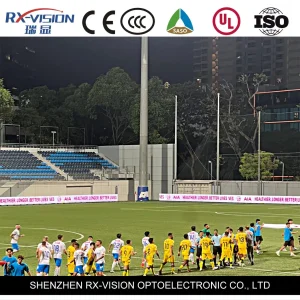
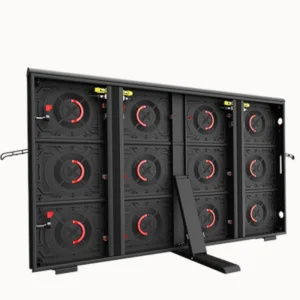
Sports Stadium LED Screen Supplier & Exporter serving Novosibirsk
Climate-ready perimeter, ribbon, center-hung and indoor sports LED systems for Siberian venues — engineered for high-refresh broadcast quality, low-temperature reliability, serviceable spare parts and long-term local support.
LYRA | LED display engineering since 2003 | Xiamen, China | Novosibirsk project support
Novosibirsk-First Product Shortlist
The four platforms below are a practical starting point for Novosibirsk sports venues, advertising operators, integrators and public-sector tender teams. They cover indoor and outdoor perimeter advertising, waterproof cabinet architecture, P6.67 to P16 pixel options and 960×960 SMD full-color configurations. Each product link below preserves the original catalogue URL so engineers, buyers and SEO researchers can verify the exact specification path.
Novosibirsk Sports Infrastructure and the LED Demand Signal
Novosibirsk is not simply another export destination. It is the largest city in Siberia, a major scientific, educational, transport, industrial and service centre, and a market where sports venues, universities, municipal programmes, private fitness operators and advertising companies all influence display specifications.
Local commercial reality
Novosibirsk combines professional and community sport with a strong science and university base. Ice hockey, football, basketball, volleyball, figure skating, martial arts, swimming and multi-sport training all create demand for scoreboards, perimeter boards, ribbon displays, entrance facades and sponsor-facing video walls. Procurement teams increasingly compare not only pixel pitch, but also service response, spare-part availability and total cost over a five-to-ten-year cycle.
Continental climate engineering
Novosibirsk has a sharply continental climate. Winter temperatures commonly fall well below −20°C, while summer conditions can exceed +30°C. The design brief must therefore address cold-start behaviour, thermal cycling, condensation risk, snow and ice around outdoor cabinets, wind loading, power stability and maintenance access during short installation windows.
Broadcast and sponsorship pressure
Modern sports LED screens are revenue infrastructure. They carry live scores, sponsor rotations, slow-motion replays, public information, emergency messages and social content. For Novosibirsk venues, flicker-free refresh, clean camera performance, reliable content scheduling and proof-of-play reporting can matter as much as brightness. LED is no longer a decorative purchase; it is part of the venue’s operating model.
Procurement and compliance
Public and private buyers may require conformity documents, electrical safety evidence, fire-safety planning, installation method statements and local integration support. A supplier with export experience should be able to prepare technical files, wiring diagrams, control protocols, spare-parts lists and commissioning guidance so the local contractor can complete approvals efficiently.
Venue segmentation
An outdoor football stadium, an indoor ice arena, a university gym and a shopping-centre fan zone do not need the same display. Outdoor perimeter screens may need 6,000–8,000 nits, IP65 or higher protection and anti-glare masks, while indoor center-hung displays may prioritise low-brightness grayscale, high refresh and quiet thermal design.
Information gain for buyers
The strongest brief is not “give me the cheapest P10.” It is a measurable operating brief: viewing distance, camera positions, ambient light, content type, power capacity, mounting method, maintenance route, warranty model, spare-module ratio and local service responsibilities. This white-paper approach reduces tender risk and helps compare suppliers on equivalent engineering ground.
20+Years of LED display industry engagement by LYRA
100%Customization support referenced in the original LYRA profile
4Core layers: power, signal, content and service redundancy
UTC+7Novosibirsk time zone for coordinated remote support planning
Macro Solution Blueprint: From Perimeter to Broadcast Control
A stadium LED deployment is a system, not a cabinet. The macro solution should connect the venue’s commercial model, architectural constraints, broadcast workflow, power infrastructure and maintenance plan. For Novosibirsk, the blueprint below is designed to support local integrators and venue owners from concept design through commissioning.
Perimeter advertising layer
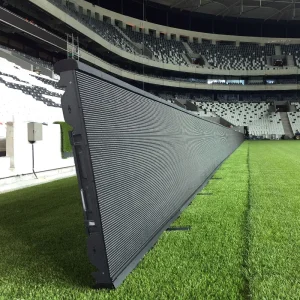
Use P6.67, P8, P10, P12.5 or P16 cabinets for pitch-side and fence-level advertising. Prioritise anti-glare masking, soft padding where required, high brightness, IP65+ sealing, quick-lock cabinets, front or rear service access and protection against ball impact. 960×960 cabinets can simplify module planning and spare-parts standardisation.
Indoor arena and center-hung layer
For basketball, volleyball, hockey and multi-sport halls, specify fine-pitch indoor displays, high refresh for cameras, low-brightness grayscale and quiet heat management. Center-hung scoreboards, ribbon boards and entrance screens should share a consistent content management workflow so operators can update scores and sponsors without specialist technical effort.
Broadcast and control layer
Plan video processing, scaling, frame synchronisation, SDI/HDMI input paths and redundant signal routing. Where the venue produces live broadcasts, flicker-free refresh and camera-friendly scan behaviour are essential. The control room should support preset scenes, scoreboard overlays, sponsor playlists, emergency messages and remote monitoring.
Climate and power layer
Low-temperature power supplies, cabinet heaters, anti-condensation logic, surge protection, stable grounding and power-factor planning should be reviewed early. Outdoor structures need snow, ice and wind consideration. Indoor ice arenas need humidity awareness, ventilation and a start-up sequence that avoids condensation on cold surfaces.
Service and spares layer
A serviceable display is a profitable display. Define spare module quantity, power supply and receiving-card stock, cabinet locks, tools, error-code documentation and remote diagnostic access. For Novosibirsk, a locally held critical spare kit can reduce downtime when transport lead times are longer during peak season.
Venue experience layer
The display should improve the fan journey: gate information, wayfinding, sponsor activation, instant replays, player introductions, community messages and fan-zone content. A well-planned LED layer becomes part of matchday operations, not a standalone screen. Content zones and scheduling rules should be agreed before installation.
Global Commercial and Industrial Status: A Buyer’s White-Paper View
Globally, sports LED displays are moving from a “pixel-pitch race” toward operational maturity. Buyers increasingly ask about energy consumption, heat management, service access, calibration stability, content integration and spare-parts continuity. The strongest manufacturers are not only selling cabinets; they are supplying an engineering pathway that allows venues to upgrade processors, sensors and content systems without replacing the mechanical structure.
Several technology directions matter for Novosibirsk tenders. First, high-refresh drivers and improved grayscale management are becoming standard for camera-facing installations. Second, common-cathode power designs and smarter brightness scheduling are being used to reduce electricity costs. Third, COB and MIP packaging, together with advanced coating and sealing, are improving robustness in demanding environments. Fourth, remote monitoring and diagnostic dashboards are helping operators identify failed modules, power abnormalities and temperature issues before they affect matchday.
Supply-chain reality also shapes procurement. International sports projects involve freight planning, customs documentation, spare-parts staging, installation supervision and long warranty administration. A supplier that can provide consistent cabinet platforms, clear module labels, standard receiving cards and English-language technical files can lower integration risk. For Novosibirsk, the best commercial strategy is often a phased rollout: start with the highest-value perimeter or entrance display, standardise cabinets and control hardware, then expand to ribbon boards, training halls and fan zones using the same service model.
Venue zone
Typical pixel pitch
Engineering priority
Novosibirsk consideration
Outdoor pitch perimeter
P6.67–P16
Brightness, IP protection, anti-glare, impact protection
Cold-start, snow/ice management, short installation window
Indoor arena ribbon
P3–P10
High refresh, wide viewing angle, low-brightness grayscale
Structural coordination and reliable spare-module kit
Entrance and facade
P4–P12
High visual impact, media revenue, remote scheduling
Weatherproofing, brightness scheduling, access control
Pixel pitch ranges are planning guides only. Final specification should follow viewing distance, camera positions, content, power and budget calculations.
Perimeter Billboard Platforms for Novosibirsk Advertising Operators
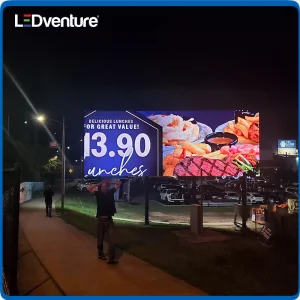
These four indoor/outdoor billboard platforms are suited to operators who need P5, P6, P6.25, P10, P12.5 or P16 options for stadium broadcasting, perimeter advertising and sponsor rotation. They can be specified for Novosibirsk with cold-climate power components, service access planning and spare-module staging.
Localized Support and Compliance Assurance for Novosibirsk Projects
For Novosibirsk, a credible LED supplier must think beyond the export invoice. The project needs documentation, climate validation, logistics coordination, installation guidance, operator training and a spare-parts plan that fits Siberian distances and seasonal constraints.
Conformity and documentation
Depending on the product and project scope, Russian market access may involve EAC conformity under applicable technical regulations, including low-voltage and electromagnetic compatibility requirements where relevant. Fire-safety, electrical installation and local permit requirements should be confirmed with the Novosibirsk integrator, insurer and authorities. LYRA project teams can prepare technical datasheets, wiring diagrams, cabinet drawings, module labels and control-system information to support the local approval process.
Cold-climate validation
The specification should define the operating temperature range, start-up procedure and storage conditions. Low-temperature power supplies, heater options, conformal coating, anti-condensation logic and thermal sensors can be discussed according to venue conditions. Indoor ice arenas need separate humidity and ventilation coordination because the screen may operate in a cool, humid environment while the control room remains warm.
Logistics and packing
Xiamen-to-Novosibirsk logistics can be planned by rail, road or air depending on schedule and volume. Cabinets, modules, power supplies and control hardware should be packed with moisture protection, shock protection and clear packing lists. For high-value venues, a recommended critical-spare kit can be shipped with the main order to avoid a second long-distance shipment after commissioning.
Local service model
A practical service model combines remote diagnostics with local installation partners. Chinese and Novosibirsk teams operate within a small time-zone difference, which can simplify real-time troubleshooting during commissioning and matchdays. A clear escalation path should define who checks power, signal, content, module and cabinet issues, and how spare parts are released.
Content and cybersecurity
Sponsor playlists, live score feeds and emergency messages should be separated by user permissions. Offline playback, scheduled content, network isolation and controller access logs help protect the venue. For public venues, content approval and emergency override procedures should be documented before the screen goes live.
Procurement note
No supplier should promise compliance without reviewing the actual installation. Final approval remains with local authorities and qualified engineers. The correct approach is to align the display specification, electrical design, mounting structure, fire plan and documentation package before shipment, reducing the risk of site delays.
Localized Application Scenarios in Novosibirsk
The same LED cabinet family can serve different venue types, but the operating requirements change significantly. These scenarios help Novosibirsk buyers map a technical specification to a real commercial or public-sector use case.
Ice hockey and figure-skating arenas
Ice arenas need camera-friendly LED, controlled brightness, anti-condensation planning and reliable content switching for scoreboards and sponsor rotations. Perimeter or ribbon displays must handle cool, humid air while remaining serviceable. A pre-heating and start-up sequence can be part of the commissioning checklist.
Football and soccer stadiums
Outdoor pitch-side screens must combine high brightness with anti-glare performance so players, referees and cameras are not distracted. P8, P10 and P16 cabinets are common for perimeter fence advertising. Impact protection, cable routing, drainage and snow clearance around the base structure should be designed alongside the display.
Basketball, volleyball and multi-sport halls
Indoor halls benefit from center-hung displays, ribbon boards and entrance screens. Fine-pitch modules deliver player names, statistics and sponsor content, while high refresh avoids flicker on broadcast cameras. Low-brightness grayscale is important because arena lighting is much lower than outdoor daylight.
Universities and sports academies
Novosibirsk’s education and science base creates demand for training facilities, sports-science labs and university arenas. These projects often value flexible content, simple operation and long service life. A standardised indoor P4–P10 platform can support training replays, event branding and public information.
Municipal and community sports centres
Public-sector projects may prioritise budget certainty, accessibility, safety documentation and easy maintenance. A smaller high-quality display with a well-planned spare kit can be more valuable than an oversized system that is difficult to service. Local contractor training and clear operating manuals support long-term use.
Fan zones, retail and transport advertising
Sports content increasingly extends beyond the stadium. Fan zones, shopping centres, exhibition venues and transport hubs can use stadium-grade LED for matchday screenings, sponsorship, wayfinding and public information. These deployments need brightness scheduling, remote content control and reliable networking.
LYRA: 20+ Years of LED Display Engineering for Export Markets
LYRA, established in 2003 in Xiamen China, has been engaged in LED industry for more than 20 years.Our dedication to innovation and quality has made us a trusted leader in the industry.
We started as a small operation, but now have become one of the leading suppliers in the LED Display industry in China.
LYRA provides comprehensive solutions and industry-leading quality. We also supports 100% customization of all kinds of displays,we can bring your ideas to life. From adjusting brightness and choosing lamp beads, to shaping it uniquely, we tailor every detail to your needs. Let's create your perfect display.
The combination of high-quality products, excellent customer service, and competitive pricing has earned us the trust and loyalty of our customers.
We believe in building strong, win-win partnerships and warmly invite you to contact us for customized solutions and to explore cooperation opportunities.
For Novosibirsk, LYRA’s experience is most useful when it is translated into project discipline: a clear requirement matrix, a climate-aware bill of materials, a realistic lead time, a packing and spare-parts plan, and a commissioning checklist that local engineers can follow. Customization can cover cabinet colour, brightness profiles, pixel pitch, module service access, control-system preferences, flight-case packaging and venue-specific content presets. Buyers should request sample test reports, module photographs, power and signal diagrams, and a written warranty and service scope before comparing price alone.
Experience also means understanding uncertainty. Stadium projects evolve: camera positions move, sponsor packages change, power rooms are redesigned and installation windows shift. A strong supplier responds with documented options rather than vague promises. LYRA’s long-running export profile and 100% customization positioning can support that process, while final engineering decisions should always be validated against the Novosibirsk site conditions.
Technical Roadmap and Future Outlook for Sports LED in Novosibirsk
Novosibirsk venues should plan for a display lifecycle of many years. The technical roadmap below is intended to help buyers avoid short-term choices that limit future content, broadcast or service options.
2026–2027: higher refresh and efficiency
Expect wider adoption of high-refresh drivers, common-cathode power, automatic brightness control and smarter thermal management. For sports venues, the practical benefit is better camera performance, lower electricity use and more stable colour when brightness changes between day and night events.
2027–2029: monitoring and predictive service
Remote monitoring will move from simple status checks to predictive maintenance: temperature trends, power-supply health, module error patterns and calibration drift. For Novosibirsk, this is valuable because remote diagnosis can reduce unnecessary site visits and help local partners prepare the correct spare parts.
Broadcast and data integration
Venues will increasingly connect LED content with scoreboard data, player tracking, sponsor platforms and streaming workflows. Open protocols, documented APIs and standards-based video processing should be part of the tender. The goal is not to buy the most complex system today, but to preserve a clear integration path.
Sustainability and total cost
Energy per square metre, standby power, packaging recyclability and spare-part longevity will influence procurement. Brightness scheduling can reduce unnecessary energy while extending LED life. A serviceable cabinet design also supports circular-economy goals by replacing modules rather than entire screens.
Climate-adaptive engineering
Future Novosibirsk projects should include temperature and humidity sensors, heater control logic, condensation-prevention sequences and weather-aware maintenance planning. Outdoor structures should consider snow load, ice formation and access safety. These are not optional extras for Siberian venues; they are design inputs.
Future-proof procurement checklist
Standardise cabinet sizes, keep a documented spare-parts list, use open video interfaces, require calibration records, request remote monitoring capability and train at least two local operators. Also clarify how firmware, control software and spare modules will be supported over the warranty period and beyond.
FAQ: Sports Stadium LED Screens in Novosibirsk
Can sports LED screens operate in Novosibirsk winter conditions below −30°C?
They can be engineered for very cold climates, but the final answer depends on the cabinet, power supply, heater design, start-up procedure and actual site conditions. A project-specific low-temperature specification is essential. Heated cabinets, low-temperature components, anti-condensation logic and controlled power-on sequencing may be required. No responsible supplier should give a guarantee based only on an air-temperature number.
Which pixel pitch is best for a Novosibirsk football stadium perimeter?
P8, P10, P12.5 and P16 are common for outdoor perimeter advertising, depending on viewing distance, camera positions, brightness, content and budget. P6.67 or finer pitch may suit premium zones or closer audience positions. Indoor arenas may use P3–P10 for ribbon and center-hung applications. A viewing-distance and camera study should determine the final choice.
How should an indoor ice arena manage condensation on an LED display?
The design should coordinate display temperature with arena humidity and ventilation. Anti-condensation coatings, controlled start-up, temperature sensors, dehumidification planning and cabinet ventilation can be considered. Maintenance access and rapid isolation of affected modules are also important. The venue’s HVAC engineer should be part of the commissioning discussion.
What compliance documents may be requested in Novosibirsk?
Project teams may request conformity documents under applicable Russian technical regulations, electrical safety information, fire-safety planning inputs, installation instructions, grounding details and control-system documentation. Requirements vary by product and installation. Final approval should be confirmed with a qualified local integrator and relevant authorities before ordering.
How can spare parts be managed for a distant Siberian venue?
A practical plan includes a critical spare kit shipped with the main order, labelled modules, spare power supplies and receiving cards, documented error codes and remote diagnostic access. The local maintenance partner should be trained to replace modules safely. For large venues, a small on-site stock can reduce downtime during the season.
Can the LED display integrate with scoreboard, replay and sponsorship systems?
Yes, provided the video processing and control architecture are planned early. The display should accept professional video inputs through industry-standard processors, support preset scenes, sponsor playlists and live score overlays, and allow emergency messages to override normal content. Broadcast venues should specify flicker-free refresh and camera-tested performance.
Can LYRA customise cabinets and brightness for a Novosibirsk venue?
The original LYRA profile states support for 100% customization of all kinds of displays, including brightness, lamp beads and unique shaping. For a Novosibirsk project, customization should be documented through drawings, specifications and approval samples before production. Custom work must still align with safety, serviceability and compliance requirements.
How should a buyer compare LED suppliers for a Novosibirsk sports project?
Compare on equivalent specifications: cabinet size, pixel pitch, brightness, refresh, IP rating, power consumption, service access, spare-parts list, warranty terms, compliance documents, packing method and commissioning support. Ask for evidence rather than brochure claims. A lower purchase price can be misleading if service access, climate protection or spare-part availability is weak.
Eight Proven Sports LED Paths for Novosibirsk Tenders
The final eight product links below preserve the original catalogue URLs and cover P10 stadium perimeter advertising, high-refresh P6 outdoor waterproof displays, large soccer-match LED boards and P8.33 fence perimeter systems. They are presented in two full rows on desktop so tender teams can compare the most relevant paths without an orphaned card or broken grid.
Share your venue type, viewing distance, camera positions, ambient light, power capacity, installation window and compliance requirements. We will help translate the brief into a practical cabinet, control, climate-protection and spare-parts configuration.
 LYRA LED