A 2025 industry whitepaper on mobile LED advertising displays, global DOOH demand, localized applications, technology roadmaps, and end-to-end manufacturing solutions from Xiamen-based LYRA — a LED display specialist since 2003.
Mobile advertising LED displays turn trucks, trailers, stadium perimeters, retail windows, and event stages into high-impact media surfaces. The product references below cover curved, flexible, rental, fixed, stadium, transparent, and mobile truck configurations. Every product link is retained for direct technical review, quotation, and customization discussions.
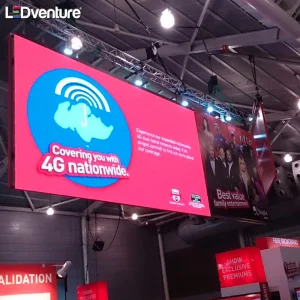 Full Color Indoor Outdoor Advertising Rental Curved Digital Mobile Flexible SMD Poster Window TV LED Billboard Display Screen with P4 P5 P6 P8 P10 P16
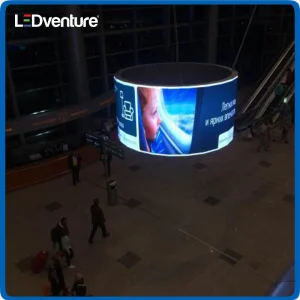 Outdoor Full Color Fixed P4.81 LED Advertising Digital Screen Display Billboard
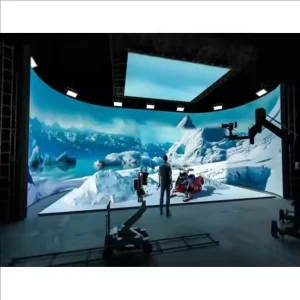 Best Selling P3.91 Flexible LED Curved Screen Digital Signage Display
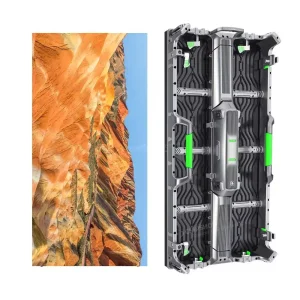 Outdoor Indoor 500*1000mm Cabinet Rental LED Screen P3.91 Rental LED Display for Events
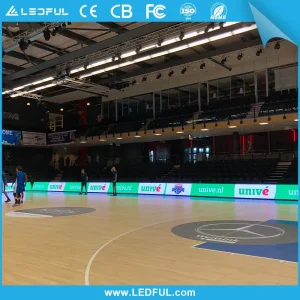 IP65 Advertising Giant Sport Stadium Billboard SMD P4 P5 P6 P10 Digital LED Stadium Perimeter Video Screen
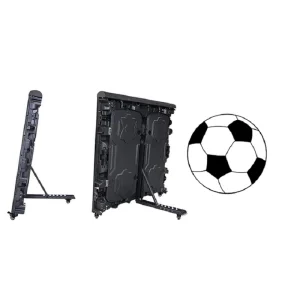 Large Sport Stadium LED Board Soccer Match Advertising Video LED Screen
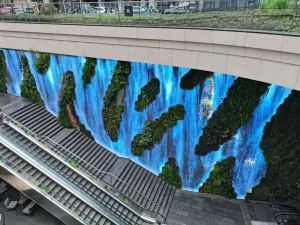 Outdoor Fixed Mobile Truck LED TV Screen/LED Display
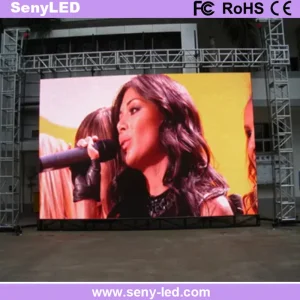 P2.5/P3.076/P4/P5 Indoor Outdoor Aluminum Cabinet Advertising Display Wall Electronic Sign Board Full Color LED Video Screen for Events Rental Purpose
Mobile advertising LED is no longer a niche alternative to static billboards. It sits at the intersection of digital out-of-home (DOOH), live events, sports marketing, retail media, and smart-city communication. The commercial value of a mobile LED display comes from three capabilities: mobility, timing, and creative control. A screen can move to a festival, a construction perimeter, a sports venue, a product launch, or a retail district; its content can change by hour, audience, sponsor, or weather condition; and its visual impact can outperform print or static media in high-traffic environments.
The global advertising market continues to shift budgets toward measurable, programmable, and visually dominant media. In industrial and commercial contexts, this shifts value from the physical billboard to the display system itself. Pixel pitch, brightness, refresh rate, structural engineering, power efficiency, serviceability, and content management all determine the return on advertising space. For manufacturers, the competitive frontier is not merely selling LED panels. It is delivering reliable, serviceable, and application-specific systems that survive transport, weather, repeated installation, and the operational realities of a media business.
China remains the world’s most concentrated manufacturing base for LED display modules, cabinets, driver ICs, power supplies, receiving cards, and control systems. The supply chain spans LED chips, packaging, PCB assembly, mechanical fabrication, calibration, and testing. For global buyers, this concentration creates a deep pool of component options but also a wide quality spectrum. A credible manufacturer must demonstrate process control, aging test discipline, calibration consistency, cabinet tolerance management, and documentation for international projects. The commercial case for mobile advertising LED is strongest where audiences gather temporarily — festivals, sports events, elections, product launches, tourism routes, construction sites, and emergency communication — because the display can move to the audience instead of waiting for the audience to arrive.
From an industrial organization perspective, the category is splitting into standardized rental products and engineered mobile solutions. Standardized cabinets support fast deployment and lower inventory risk. Engineered trailer and stadium systems require structural calculations, wind-load consideration, lifting mechanisms, power distribution, and reliable content connectivity. The most successful projects treat the LED screen as one part of a mobile media asset: the trailer chassis, screen mounting, generator or power supply, control room, network link, and maintenance access must be designed together. This systems view is where experienced manufacturers create information gain beyond a simple price list.
Several industry trends are reshaping procurement decisions. Buyers increasingly evaluate total cost of ownership, not only price per square meter. They ask about refresh rate for camera-facing events, brightness for daylight visibility, weight for trailer payload, serviceability for remote locations, and content workflows for multi-market campaigns.
P2.5, P3.91, and finer pitches are moving into premium rental and mobile applications. Fine pitch improves close-viewing clarity for retail, corporate events, and broadcast studios, but demands tighter module flatness, better heat management, and robust transportation protection.
Sports broadcasting, live streaming, and hybrid events require refresh rates that avoid scan lines on camera. High refresh drivers, precise grayscale processing, and stable power delivery are becoming baseline requirements for stadium and event screens.
Energy costs and heat affect lifetime and operational range. Common-cathode designs, efficient drivers, and intelligent brightness control reduce power consumption while maintaining visual performance — a critical advantage for trailer-based screens powered by generators or batteries.
Curved and flexible LED modules allow creative staging, vehicle wraps, and architectural integration. Transparent film displays support window advertising without blocking daylight. These formats expand localized use cases but require careful mounting, calibration, and protection.
Cloud-based content management, 4G/5G connectivity, and remote monitoring let operators update campaigns across cities, schedule content by location and time, and diagnose faults without sending technicians. This shifts value toward software-enabled service and uptime guarantees.
Buyers are asking about recyclable packaging, lead-free processes, low-VOC coatings, modular replacement, and refurbishment pathways. Sustainability is becoming part of tender evaluation, especially in Europe and public-sector projects.
Mobile advertising LED requirements change by region. Climate, regulation, audience behavior, transportation rules, and power infrastructure all influence the optimal configuration. The following localized scenarios are based on common project patterns; final specifications should be confirmed with site surveys and local compliance checks.
High-brightness P5–P10 screens on DOT-compliant trailers, with generator or hybrid power, remote content scheduling, and robust bumper protection for highway transport.
Quiet operation, low energy consumption, rapid rigging, and compliance with local event safety rules. Transparent and curved displays suit retail windows and cultural events.
High-brightness outdoor screens with enhanced thermal design, IP-rated enclosures, and dust management for plazas, sports events, and tourism destinations.
Humidity-resistant designs, accessible service, and cost-efficient rental cabinets for shopping districts, concerts, and mobile promotions in dense cities.
Trailer and truck screens for flexible route-based campaigns, with simple maintenance, spare-part availability, and content control for multi-vehicle operations.
Integration with digital signage networks, exhibition rental, live streaming, and public information. Fast project cycles reward modular inventory and responsive service.
Perimeter LED with high refresh, soft-mask options, and impact-resistant mounting for football, basketball, and multi-sport venues. Camera-facing performance is critical.
Lightweight cabinets, quick locks, curved capability, and flight-case logistics for concerts, conferences, product launches, and touring productions.
The technology roadmap for mobile advertising LED is shaped by four forces: image quality, transport efficiency, energy performance, and network integration. The following timeline summarizes broad industry direction rather than a single product release schedule.
Surface-mount device (SMD) LED cabinets became lighter, faster to install, and more reliable for touring. Fine-pitch rental displays moved from niche to mainstream in events and broadcast environments.
Glue-on-board (GOB) and chip-on-board (COB) approaches improved protection and flatness. Common-cathode power architectures reduced energy use, while high-refresh drivers became common in sports and camera-facing applications.
Flexible modules, transparent film screens, and integrated trailer systems expanded creative and mobile use cases. Cloud content management and remote diagnostics became commercial differentiators.
Micro LED in package (MIP) and advanced packaging continue to push pitch and reliability. AI-assisted brightness control, content scheduling, and predictive maintenance help operators reduce energy and downtime.
Sensor-integrated displays, audience-aware content, vehicle-to-network communication, and city-scale media networks point toward more adaptive outdoor advertising. Standardization and serviceability will matter as much as pixel pitch.
For buyers, the practical implication is to specify for a five-to-seven-year operating horizon. A screen purchased only on initial price may become expensive if it cannot be serviced, upgraded, or integrated with a content platform. LYRA’s engineering approach focuses on modularity, component traceability, and customization so that a display can be matched to a trailer, stadium, window, or event workflow rather than forced into a one-size-fits-all cabinet.
A mobile advertising LED project succeeds when hardware, structure, power, content, and service are designed as one system. The following macro solutions show how buyers can move from a panel purchase to an operational media asset.
For advertising fleets, the display must survive road vibration, weather, and repeated deployment. LYRA can support cabinet selection, trailer mounting requirements, brightness configuration, power planning, and maintenance access. The objective is uptime: a screen that arrives, rises, connects, and displays the right content on schedule.
Sports venues need camera-ready refresh, uniform brightness, impact protection, and easy segment replacement. Perimeter screens also interact with broadcast lighting and spectator sightlines. Project-specific engineering should address cabinet angles, soft-mask branding, control redundancy, and match-day service response.
Retail media networks require slim form factors, quiet operation, and content that complements the physical environment. Transparent LED film and ultra-thin glass displays can turn windows into media surfaces without blocking daylight. Brightness, transparency, and color consistency must be balanced against store design and local regulations.
Event rental demands lightweight cabinets, fast locks, curved capability, and predictable color performance across batches. For touring productions, flight-case logistics and spare-part planning are as important as the LED itself. Manufacturers should provide configuration documentation and training so local crews can deploy consistently.
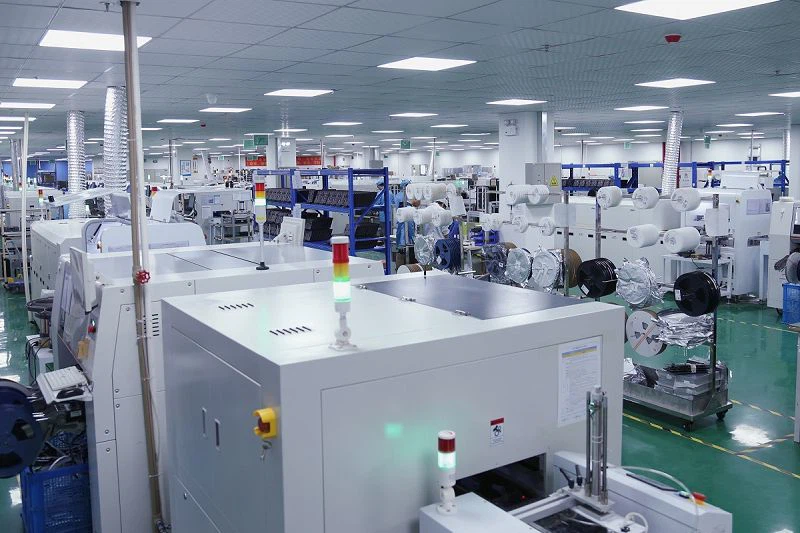
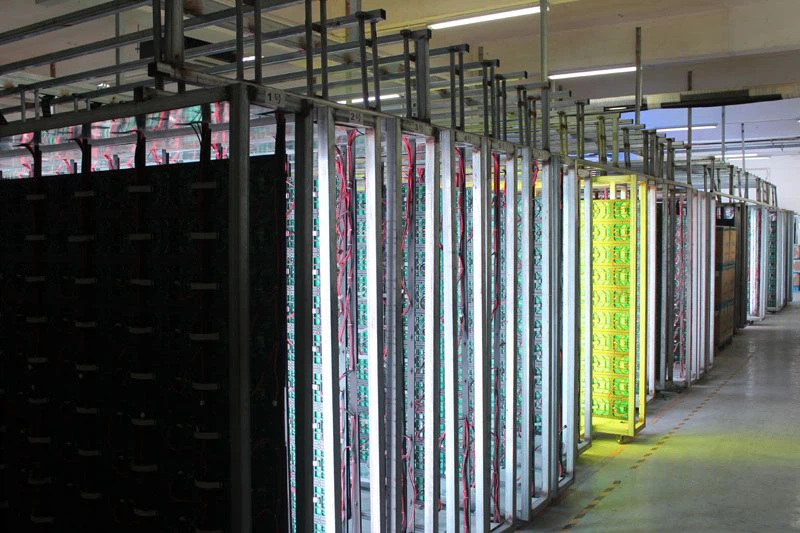
LYRA, established in 2003 in Xiamen China, has been engaged in LED industry for more than 20 years. Our dedication to innovation and quality has made us a trusted leader in the industry.
We started as a small operation, but now have become one of the leading suppliers in the LED Display industry in China.
LYRA provides comprehensive solutions and industry-leading quality. We also support 100% customization of all kinds of displays, we can bring your ideas to life. From adjusting brightness and choosing lamp beads, to shaping it uniquely, we tailor every detail to your needs. Let’s create your perfect display.
The combination of high-quality products, excellent customer service, and competitive pricing has earned us the trust and loyalty of our customers.
We believe in building strong, win-win partnerships and warmly invite you to contact us for customized solutions and to explore cooperation opportunities.
Since 2003, LYRA has worked across LED module selection, cabinet fabrication, system integration, and project support. That experience matters in mobile advertising because the failure modes are rarely limited to the LED lamp. Vibration, heat, power quality, connector wear, and content workflow all affect the final result.
A manufacturer’s expertise should be visible in specifications and process. Buyers should ask for module flatness, brightness uniformity, refresh rate, power consumption, cabinet tolerance, ingress protection, aging test records, and spare-part strategy. LYRA’s customization scope includes brightness adjustment, lamp bead selection, cabinet shaping, and application-specific configuration.
Authority is not a logo wall. It is the ability to explain trade-offs. A P3.91 screen may be ideal for close-viewing events but unsuitable for a highway-facing trailer where viewing distance is longer. A high-brightness stadium screen may be unnecessary for a shaded retail window. A credible manufacturer helps the buyer choose the right pitch, brightness, and structure for the actual audience.
Trust is built through documentation, consistency, and service. International buyers need clear drawings, bill of materials, packing lists, installation guidance, and responsive communication. Competitive pricing matters, but it should not come from hidden compromises in power supplies, driver ICs, or waterproofing. LYRA’s stated commitment — high-quality products, excellent customer service, and competitive pricing — is a practical framework for evaluating total cost of ownership.
These questions reflect common technical and commercial checks raised by distributors, media owners, event producers, and sports venues.
A mobile advertising LED display is a modular LED screen designed to move with the audience or campaign. It may be mounted on a truck or trailer, built into a stadium perimeter, installed in a retail window, or assembled as a rental wall for events. The key design criteria are brightness, pixel pitch, weight, structural protection, power efficiency, and fast deployment. The best specification depends on viewing distance, ambient light, transport method, and content type.
China hosts a mature LED display supply chain, from LED chips and driver ICs to cabinets, power supplies, and control systems. A manufacturer with more than 20 years of experience can help buyers navigate component choices, cabinet design, and application trade-offs. LYRA has been engaged in the LED industry since 2003 and supports customization, which is valuable when a standard cabinet does not fit a trailer, window, or stadium installation.
Yes. Customization can include pixel pitch, brightness, cabinet dimensions, module arrangement, curvature, mounting interfaces, and branding details. The starting point should be the application: viewing distance, ambient light, transport limits, and service access. LYRA’s stated capability includes adjusting brightness, choosing lamp beads, and shaping displays uniquely. Buyers should confirm final drawings, bill of materials, and test criteria before production.
For mobile advertising viewed from 5–20 meters, P5–P10 is often practical because it balances resolution, cost, and brightness. Closer viewing, such as experiential events or retail, may justify P2.5–P4.81. Highway-facing or large-format applications may use P10–P16. The decision should also consider content resolution, trailer payload, power capacity, and the typical distance of the target audience.
Outdoor cabinets are commonly designed with IP-rated enclosures, sealed modules, and corrosion-resistant hardware. However, weather protection is system-level: cable entries, connectors, ventilation, drainage, and trailer mounting all matter. Buyers should specify the expected climate, operating temperature, wind exposure, and storage conditions. For coastal, desert, or high-humidity projects, additional protection and maintenance schedules should be discussed during configuration.
Displays can be controlled locally via media players, laptops, or event controllers, and remotely via 4G/5G or network links. Cloud content management systems allow scheduling, playlist changes, and multi-site monitoring. For advertising fleets, remote diagnostics and content version control are important. Buyers should confirm compatibility with their preferred CMS, player, and network environment rather than assuming that a screen is plug-and-play with every platform.
International projects typically require export packing, compliance documentation, installation drawings, and spare-parts planning. For mobile and rental applications, training should cover cabinet assembly, alignment, connector care, and basic troubleshooting. After-sales support may include remote diagnosis, spare module supply, and replacement guidance. The service agreement should define response expectations, warranty terms, and the recommended spare ratio for the project’s operating intensity.
Lead time depends on pixel pitch, cabinet design, customization level, component availability, and order volume. Standard rental cabinets may move faster than engineered trailer or stadium systems. MOQ also varies: some standard products can be ordered in small batches, while fully customized cabinets may require higher quantities to justify tooling and production setup. Buyers should provide drawings, application details, and target schedule for an accurate quotation.
Ask for measurable specifications and process evidence: module flatness, brightness uniformity, refresh rate, grayscale performance, power consumption, cabinet tolerance, aging test records, and packing standards. A factory audit or video review can confirm production equipment and quality workflow. For mobile applications, vibration resistance, connector locking, and serviceability should be reviewed alongside LED parameters. Reliability is a system property, not a single datasheet value.
Prepare the application, viewing distance, screen size, pixel pitch preference, brightness requirement, installation method, power supply, control system, destination country, and target schedule. Photos or drawings of the truck, trailer, stadium, or window are helpful. LYRA welcomes customization discussions and can translate project requirements into a configuration for review. Early technical consultation reduces redesign risk and helps align budget, performance, and delivery.
Mobile advertising LED is a system-level investment. The right manufacturer should provide more than a cabinet price; it should provide application insight, customization, documentation, and service discipline. LYRA’s 20+ years in the LED industry, Xiamen manufacturing base, and 100% customization approach make it a relevant partner for buyers seeking China-based mobile LED advertising solutions. Explore the product references below, compare specifications, and start a technical conversation with the application details.
Additional references for transparent displays, stadium perimeter screens, OEM/ODM video walls, mobile truck advertising, and high-refresh event displays. Product URLs and images are retained for direct specification review.
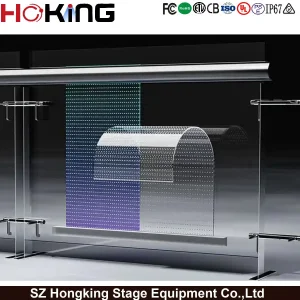 Ultra Thin Glass Window LED Flexible 3D Display Transparent LED Film Display Screen
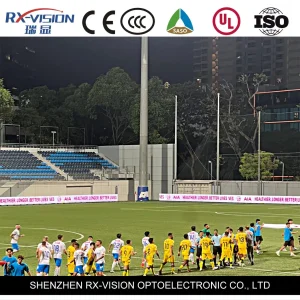 Sports Basketball Football Soccer P10 Stadium Perimeter Advertising LED Display Screen
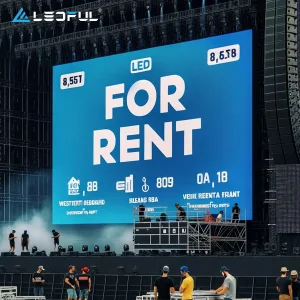 OEM ODM Outdoor Indoor Fullcolor SMD P10 P8 P6 P4.81 P3.91 P3 P2.5 P2 P1 Rental Curved Digital Advertising Video Wall LED Sign Billboard Panel Screens Display
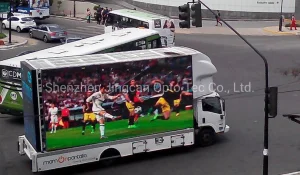 Outdoor Moving Vehicle Video Advertising Mobile Trailer/Truck LED Display
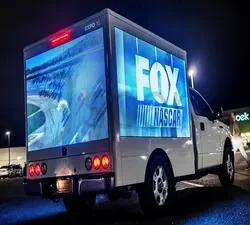 P5 Outdoor Full Color Rental High Quality Mobile Truck Trailer Car Moving Advertising LED Display
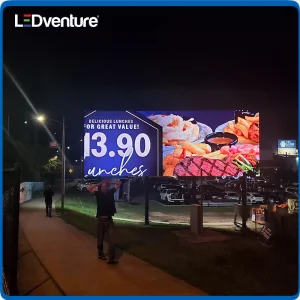 New Design Indoor Outdoor LED Perimeter Advertising Billboard Full Color Screen Display for Sports Stadium Broadcasting P5 P6 P6.25 P10 P12.5 P16 Price
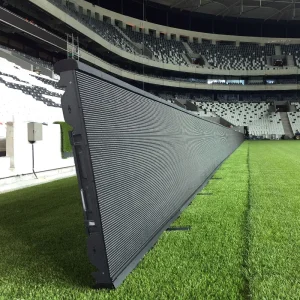 Indoor Sports Gym/Football Stadium P10 Advertising LED Sign Display LED Screen
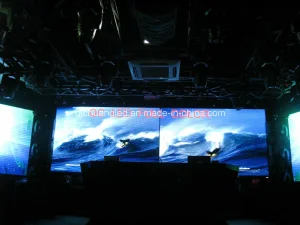 Top LED Outdoor High Refresh P3.91 Advertising LED Display for Event for Stage
 LYRA LED