High-resolution, robust solutions optimized for commercial, rental, and digital out-of-home advertising infrastructures.
Years Industry Heritage (Since 2003)
Tailored OEM/ODM Customization
Asynchronous Transmission Reliability
Countries Supplied Globally
In the contemporary digital landscapes, wireless communication technologies have reshaped display architectures. Traditional wired digital signs, constrained by complex HDMI/DVI/DP cabling matrices and local optical fiber systems, are being rapidly phased out. In their place, Wireless LED displays integrated with cellular networks (4G LTE, 5G NR), dual-band Wi-Fi, and IoT protocols have risen to the forefront. This evolution shifts the control topography from localized physical connections to centralized, cloud-based asynchronous control systems, providing global scalability for multi-site deployments.
Information Gain Insight: The integration of cellular wireless systems directly onto sending/receiving cards (e.g., NovaStar Taurus series controllers) enables edge computing capabilities. Modern screens do not simply receive pixel maps; they compute display algorithms locally, schedule smart power saving parameters, and feed telemetry data back to IoT device monitoring dashboards.
Globally, the market demand for smart wireless LED displays is surging across urban infrastructure networks. Municipalities, transit authorities, corporate entities, and large-scale retail operators demand dynamic content deployment capability without structural fiber modifications. Real-time updates, system health diagnostic tracking, and low-latency synchronization over wireless bands have moved from niche features to base technical criteria.
Furthermore, standardizing agencies like the Federal Communications Commission (FCC) in the United States and the European Telecommunications Standards Institute (ETSI) have set strict protocols for RF interference. Consequently, top-tier factories must design displays that maintain high electro-magnetic compatibility (EMC) standards to prevent communication dropouts and surrounding cellular interference, which is a major differentiator between tier-1 facilities and cheaper alternatives.
An asynchronous wireless LED display is built upon three foundational technical layers:
Sourcing from a leading wireless LED display factory requires evaluating more than just cost-per-square-meter. Enterprise buyers must measure factories against these complex performance markers:
Premium manufacturers employ multi-layer EMI shielding over the Wi-Fi/4G modems and construct Faraday enclosures within the aluminum frame to shield signal paths from internal power supply noise.
High-end displays rely on automated color uniformity calibration. The LED matrix must be calibrated at the pixel level to eliminate chromatic aberration across different modules.
Outdoor cabinets require IP65/IP66 ratings. Top factories use die-cast aluminum cabinets with custom rubber gaskets, maintaining thermal dissipation without water ingress.
Industrial capacity, global footprint, and custom technological engineering from Xiamen, China.
LYRA, established in 2003 in Xiamen China, has been engaged in LED industry for more than 20 years. Our dedication to innovation and quality has made us a trusted leader in the industry.
We started as a small operation, but now have become one of the leading suppliers in the LED Display industry in China.
LYRA provides comprehensive solutions and industry-leading quality. We also supports 100% customization of all kinds of displays, we can bring your ideas to life. From adjusting brightness and choosing lamp beads, to shaping it uniquely, we tailor every detail to your needs. Let's create your perfect display.
The combination of high-quality products, excellent customer service, and competitive pricing has earned us the trust and loyalty of our customers. We believe in building strong, win-win partnerships and warmly invite you to contact us for customized solutions and to explore cooperation opportunities.
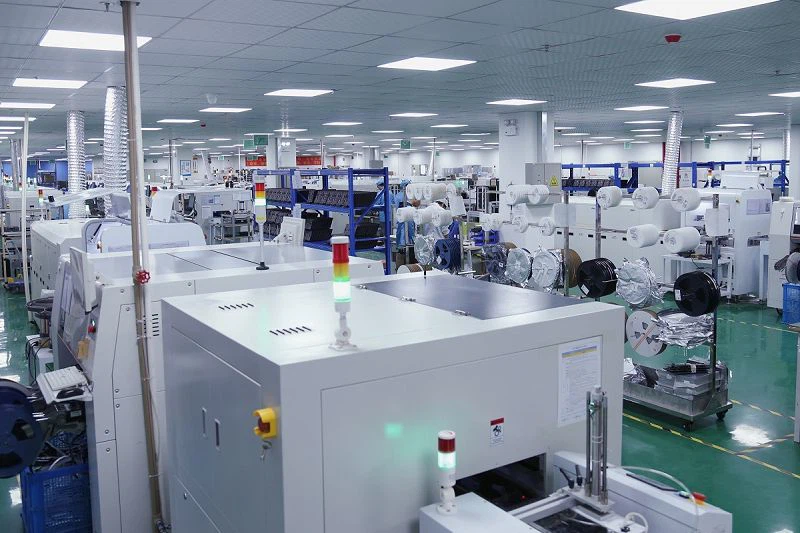
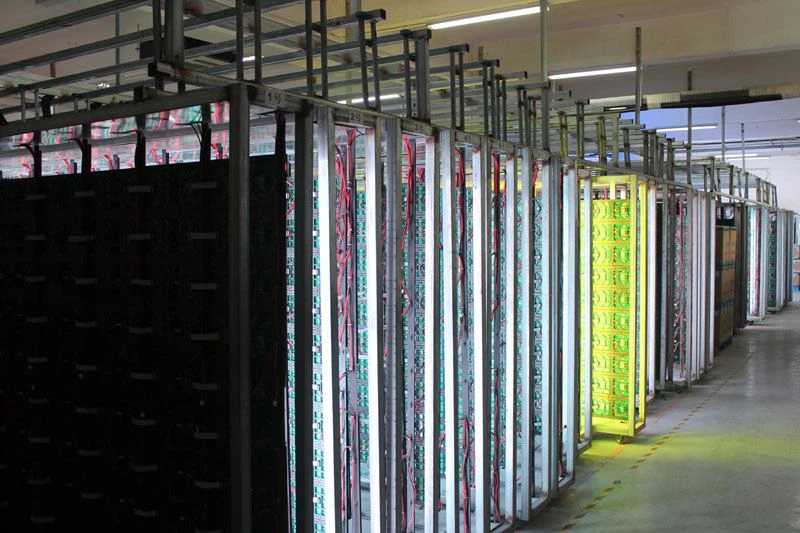
China's dominance in the LED production pipeline is not simply a matter of labor pricing, but is built on complex industrial clustering, deep-rooted supply chains, and extensive R&D investments. In specialized zones like Xiamen and Shenzhen, component logistics operate with exceptional efficiency. High-speed surface mount technology (SMT) packaging machines, automated optical inspection (AOI) testers, and automated heat-cycling chambers work in unison to scale production lines rapidly.
For international buyers, this domestic supply chain integration means that customized specifications—such as variable pixel pitches, custom structural frames, non-standard power modules, and specialized wireless network adapters—can be engineered, prototyped, and brought to mass production within weeks, compared to months elsewhere.
Wireless LED displays serve highly specialized localized settings across various global markets:
The convergence of mini-LED/micro-LED packaging and high-frequency wireless communications is driving the next wave of display innovation. Key developments include:
Crucial engineering and procurement questions answered by manufacturing specialists.
Synchronous control requires a live, continuous physical or wireless connection to an active video source (like a PC or video processor), mirroring the source desktop in real time. Asynchronous controllers run an onboard operating system (usually Linux/Android) with flash memory. Content is pushed once via 4G/5G, Wi-Fi, or USB, cached locally, and played back independently. This makes asynchronous control ideal for geographically dispersed signage networks.
Advanced asynchronous systems utilize built-in media loops. In the event of a connection failure, the controller plays cached media uninterrupted. Simultaneously, the system runs local diagnostic checks and attempts to reconnect. Real-time network heartbeats monitor these events, triggering automated email or SMS notifications via the cloud CMS if a screen remains offline.
For Europe, displays must carry CE marking, comply with RoHS restrictions, and pass EN55032 Class A electromagnetic emissions testing. For North America, FCC Part 15 subpart B compliance is required alongside UL/ETL electrical safety certifications. Sourcing from factories like LYRA, which strictly adhere to international certifications, ensures hassle-free customs clearance and limits liability during commercial installations.
In standard common anode setups, red, green, and blue diodes are supplied with a single, uniform voltage line, wasting energy as heat on the lower-voltage red LED. Common cathode technology separates the power supply paths, routing targeted voltages directly to each diode (typically 2.8V for red, 3.8V for green and blue). This separation minimizes thermal emission and power usage while extending overall display lifespan.
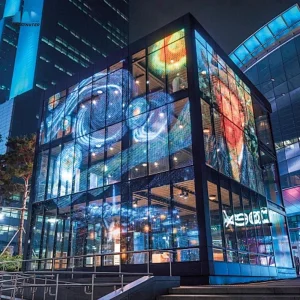
Explore our secondary tier of ultra-thin, small pitch, and highly transparent display panels engineered for enterprise layouts.
 LYRA LED