High-performance indoor, outdoor, stadium, flexible, and fine-pitch video display panels engineered for maximum visual impact and reliability.
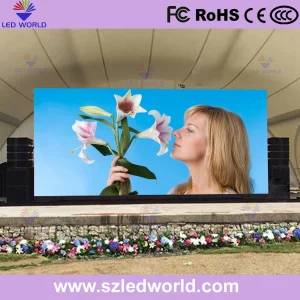
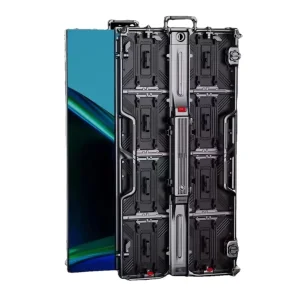
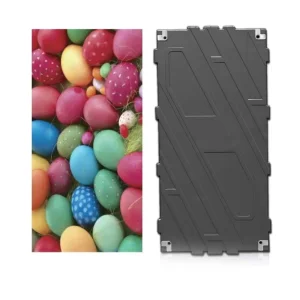
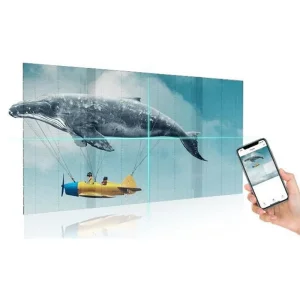
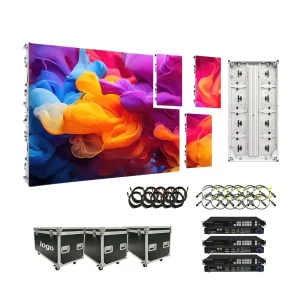
The global optoelectronics landscape has underwent a paradigm shift over the past two decades. Today, mainland China manufactures and exports over 85% of the world’s LED video displays, serving diverse industries ranging from Out-of-Home (OOH) advertising and broadcast television studios to command-and-control centers, sports arenas, and virtual production setups. Understanding why top international system integrators, media conglomerates, and commercial project owners consistently source from China LED video display factories and suppliers requires examining the industrial cluster density, technological convergence, and complete supply chain vertically integrated within key manufacturing hubs like Xiamen, Shenzhen, and Guangzhou.
China's manufacturing dominance is not merely built on cost efficiencies; it is powered by continuous technological innovation and unmatched supply chain responsiveness. The synergy between upstream LED chip manufacturers (such as Sanan Optoelectronics, Epistar), midstream packaging powerhouses (Nationstar, Kinglight), and downstream system integrators enables rapid prototyping, rigorous quality testing, and aggressive scaling. Whether a project calls for ultra-fine pitch MicroLED displays (sub-0.9mm), ruggedized IP65/IP67 outdoor billboards capable of withstanding hurricane-force weather, or flexible 3D curved visual arrays, Chinese manufacturers deliver unrivaled engineering precision.
Information Gain Insight: Sourcing directly from top-tier Chinese LED display OEMs eliminates unnecessary intermediary markups, guarantees direct access to advanced driving IC technology (e.g., Macroblock, Chipone), and unlocks complete custom fabrication—from bespoke PCB layout engineering to dynamic software controller integration.
Selecting the ideal video display module requires a granular engineering understanding of packaging methodologies, pixel pitch physics, dynamic refresh capabilities, and thermal management. Below is an expert breakdown of the critical technologies defining modern LED display architecture:
The global benchmark for indoor and outdoor LED displays. RGB chips are encapsulated into standard discrete lamp beads (e.g., SMD1415, SMD1921, SMD2727) and surface-mounted onto multi-layer PCBs. Offers outstanding color consistency and straightforward field repairability.
Next-generation packaging where un-encapsulated bare LED chips are bonded directly to the substrate and covered with a protective epoxy resin film. COB yields superior thermal dissipation, ultra-high contrast ratios, IP65 module surface protection, and anti-collision robustness for fine-pitch displays (< P1.2mm).
An innovative intermediate technology where standard SMD modules are encapsulated with a optical-grade transparent resin matrix. GOB provides robust moisture-proof, dust-proof, anti-static (ESD), and impact-resistant characteristics—ideal for rental stages and high-traffic public installations.
Engineers and procurement teams must evaluate pixel density based on viewing distances. The matrix below outlines standardized technical benchmarks across product classes:
| Category | Pixel Pitch Range (mm) | Encapsulation Type | Optimal Viewing Distance | Brightness (Nits/cd/m²) | Primary Application Areas |
|---|---|---|---|---|---|
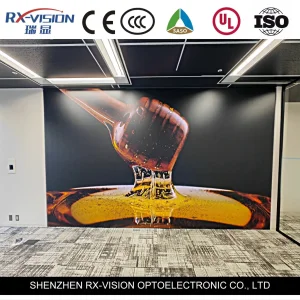
| Ultra Fine Pitch | P0.9 - P1.53 | COB / MicroLED / Fine SMD | 1.0m – 3.0m | 600 – 1,000 Nits | Control Rooms, TV Broadcast Studios, XR Stages |
| Commercial Indoor | P1.86 - P2.5 | SMD / GOB | 2.0m – 5.0m | 800 – 1,200 Nits | Corporate Boardrooms, Luxury Retail, Airports |
| Event Rental Stage | P2.6 - P3.91 | SMD with Die-Cast Aluminum | 3.0m – 10.0m | 1,000 – 4,500 Nits | Concerts, Exhibitions, Temporary Installations |
| Fixed Outdoor Billboard | P4.0 - P10.0 | Outdoor High-Brightness SMD | 5.0m – 50.0m+ | 5,500 – 10,000 Nits | DOOH Advertising, Highways, Building Facades |
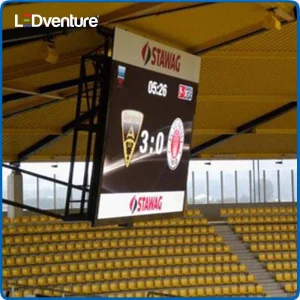
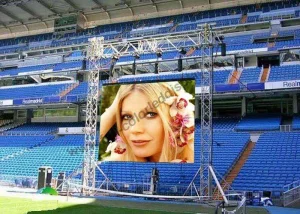
| Stadium Perimeter | P6.0 - P10.0 | SMD with Soft Mask Protection | 8.0m – 30.0m | 6,000 – 8,000 Nits | Sports Arenas, Football Fields, Event Centers |
Visual fidelity on camera lenses depends directly on the dynamic refresh rate and grayscale processing capabilities. Standard LED modules utilizing basic driver ICs operate at ~1920Hz, which can cause subtle flickering, horizontal scanning lines, or color banding when recorded by high-speed digital broadcast cameras. Top-tier Chinese suppliers integrate advanced PWM driver ICs (such as MBI5252 or ICN2053/2065), driving refresh rates up to 3840Hz – 7680Hz with 16-bit to 22-bit grayscale depth.
Furthermore, modern sustainable installations leverage Common Cathode Power Supply Architecture. Unlike traditional Common Anode configurations that feed uniform voltage to Red, Green, and Blue diodes (resulting in wasted heat from the Red diode's lower voltage threshold), Common Cathode systems independently supply precise voltages to each diode color. This reduces overall power consumption by up to 30%-40%, lowers working operating temperatures by 15°C–20°C, and extends diode operational lifespan beyond 100,000 hours.
Established in 2003 in Xiamen, China, LYRA has stood at the forefront of the global LED video display industry for more than 20 years. What began as a dedicated engineering unit has evolved into a premier high-tech enterprise, commanding state-of-the-art automated manufacturing facilities, advanced SMT lines, and international OEM/ODM distribution networks.
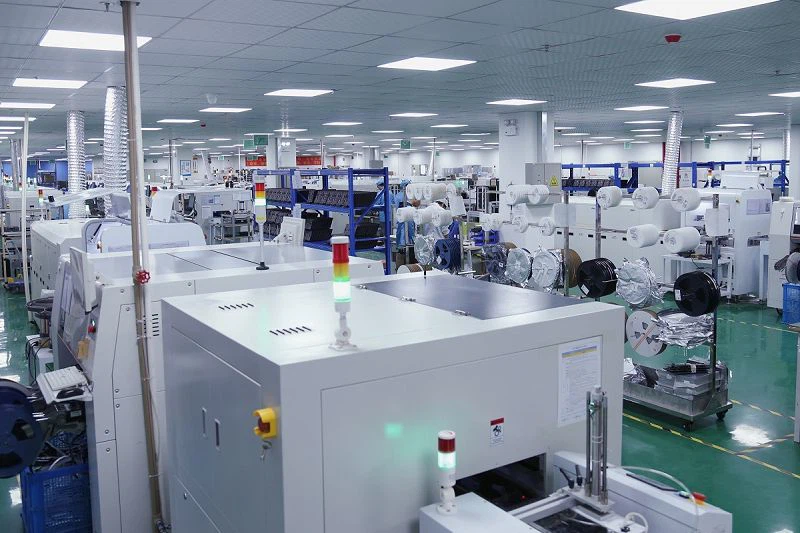
LYRA’s long-standing leadership stems from an uncompromising commitment to research and development, strict quality management system protocols, and customer-centric design flexibility. By operating fully integrated production centers in Xiamen, LYRA ensures total quality control over every stage—from wafer inspection and SMD sorting to SMT assembly, conformal coating, and 72-hour continuous burn-in testing.
Whether standard fine-pitch modules or complex, customized creative structures are required, LYRA combines elite manufacturing capability with highly competitive factory-direct pricing.
LYRA empowers system integrators and architectural designers by supporting 100% custom tailoring across all display categories. Ideas move seamlessly from technical blue-prints to structural execution:
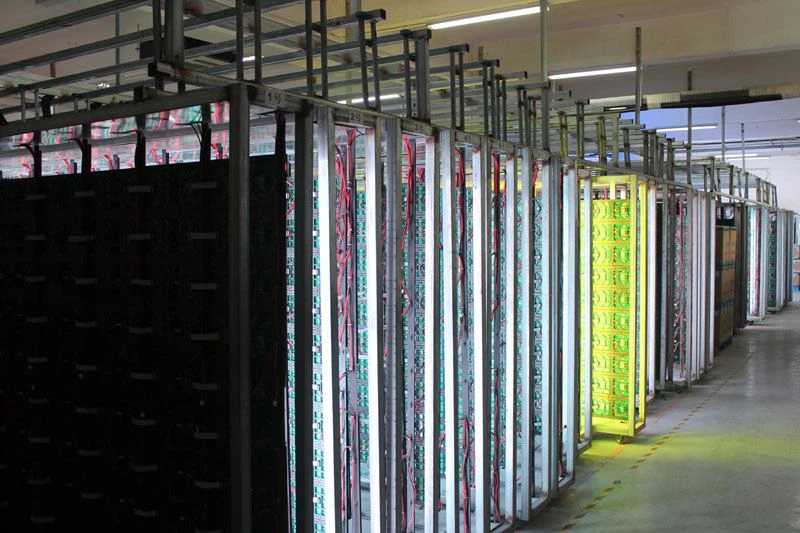
Core Value Proposition: LYRA builds enduring, win-win commercial partnerships with global distributors, rental companies, and engineering clients worldwide. Through high-performance LED display engineering, certified quality compliance (CE, RoHS, FCC, ETL), and responsive customer support, LYRA transforms visual ideas into vibrant reality.
Leading Chinese LED display suppliers do not merely manufacture panel hardware—they design end-to-end macro solutions customized for specific commercial environment challenges.
Utilizing high-brightness (7,500+ nits) outdoor P4/P5/P6/P10 LED panels paired with right-angle seamless corner cabinets. Combined with specialized anamorphic 3D video content, these displays turn high-street commercial facades into landmark public spectacles.
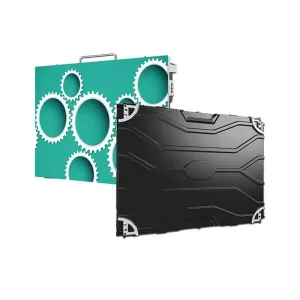
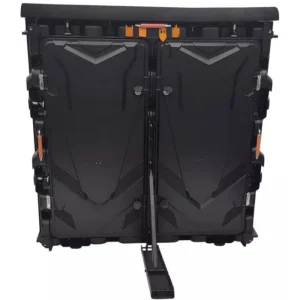
Featuring fast-locking mechanisms, lightweight die-cast aluminum cabinets (e.g., 500x500mm / 500x1000mm P2.6, P2.9, P3.91 modules), and drop-resistance corner protectors for rapid assembly, tear-down, and frequent transportation safety.
Sub-1.5mm fine pitch COB/SMD displays featuring zero-bezel seamless splicing, redundant dual-power and card backup systems, low radiation, silent fanless cooling, and multi-signal IP stream management.
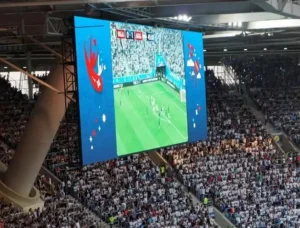
Designed with impact-absorbing soft masks and soft top covers to protect athletes from accidental impact. High dynamic refresh rate (3840Hz+) guarantees clear, tear-free live TV broadcasting and slow-motion replays.
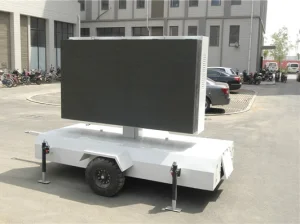
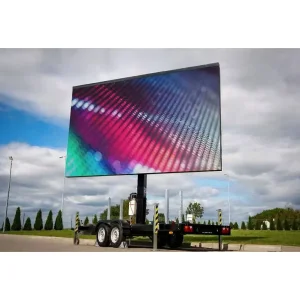
Vibration-resistant P4/P5/P6 mobile LED screens engineered for vehicle integration. Supported by automated hydraulic lifting systems and generator units for mobile ad campaigns, parades, and roadshows.
High-transparency (60%-80%) side-emitting LED displays allowing ambient light transmission into building interiors while displaying vivid full-color video content on exterior storefront windows.
For global enterprise buyers, system integrators, and procurement officers, vetting factory suppliers in China requires a systematic verification methodology to ensure long-term ROI and operational stability.
Avoid over-specifying pixel density, which unnecessarily inflates capital expenditure. Use the standardized minimum viewing distance engineering rule:
Formula: Minimum Viewing Distance (Meters) = Pixel Pitch (mm) × 1.0 to 1.5
Example: For a P2.5 screen, optimal viewer clarity starts at approximately 2.5 meters. Purchasing a P1.2mm screen for a viewing distance of 10 meters yields no practical resolution advantage while doubling costs.
Expert answers to common engineering, ordering, shipping, and technical specifications questions.
Explore mobile advertising trucks, high-refresh stage rentals, stadium perimeter displays, and small pixel pitch meeting room screens.
 LYRA LED