Explore our flagship lineup of premium indoor, outdoor, and specialized 3D holographic systems designed for commercial dominance.
Established in 2003 in Xiamen, China, LYRA has engineered high-end LED screen technology for enterprise clients worldwide.
Founded in 2003 in the high-tech optical manufacturing hub of Xiamen, China, LYRA has spent more than 20 years at the vanguard of the optoelectronic industry. What began as a highly specialized R&D workshop has matured into a top-tier global exporter and manufacturer of state-of-the-art LED display panels and visual solutions. Our multi-decade growth trajectory represents a continuous commitment to precision manufacturing, structural integrity, and optoelectronic innovation.
For two decades, LYRA has bridged the gap between complex engineering concepts and physical installations. Our manufacturing infrastructure supports custom display modifications, offering tailored outdoor waterproofing, extreme-brightness adjustments for direct sunlight environments, and structural engineering compliance for seismic and high-wind environments. By maintaining end-to-end manufacturing oversight in Xiamen, we deliver premium products with maximum cost efficiencies.
An analytical breakdown of the structural, logistical, and technical parameters that position Chinese manufacturers as global leaders.
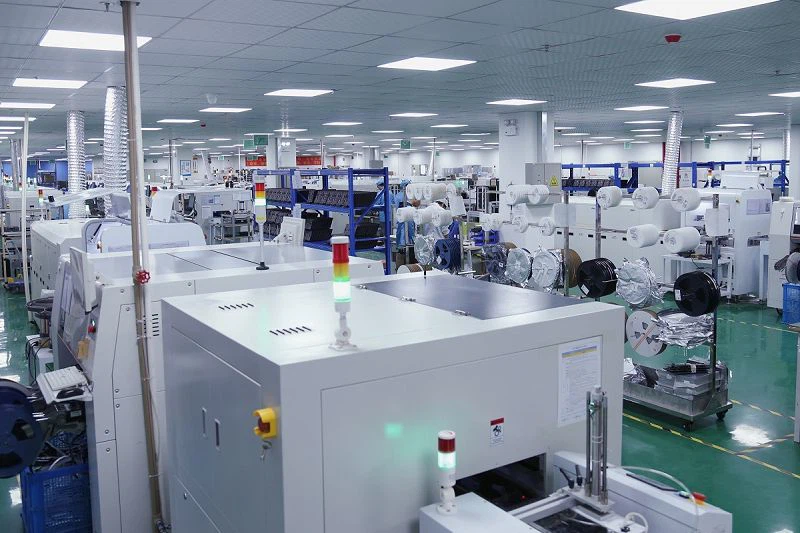
The global digital out-of-home (DOOH) advertising sector is dominated by Chinese LED display infrastructure. This concentration is not merely a consequence of labor costs, but rather the result of a highly consolidated industrial ecosystem. The Fujian-Guangdong industrial corridor represents the world's most integrated optoelectronic supply chain, bringing together semiconductor wafer growers, precision packaging plants, high-speed SMT (Surface Mount Technology) assembly lines, and global shipping ports into a 150-kilometer radius.
Chinese manufacturers benefit from direct access to key component suppliers. By sourcing premium LED chips (such as San'an Optoelectronics or Epistar) and packaging solutions (such as Nationstar or Kinglight) domestically, exporters can reduce material lead times to nearly zero. Additionally, proximity to leading controller manufacturers (such as NovaStar and Colorlight) ensures that newly built LED billboards utilize the latest hardware-level calibration and signal distribution technologies.
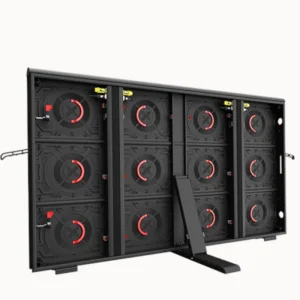
High-reliability outdoor installations require precise thermal planning. The integration of die-cast aluminum and magnesium alloys in cabinet frame fabrication provides structural rigidity while acting as an effective heat sink. LYRA utilizes optimized convection paths that eliminate the need for active cooling fans in temperate environments, lowering operating costs and minimizing failure points.
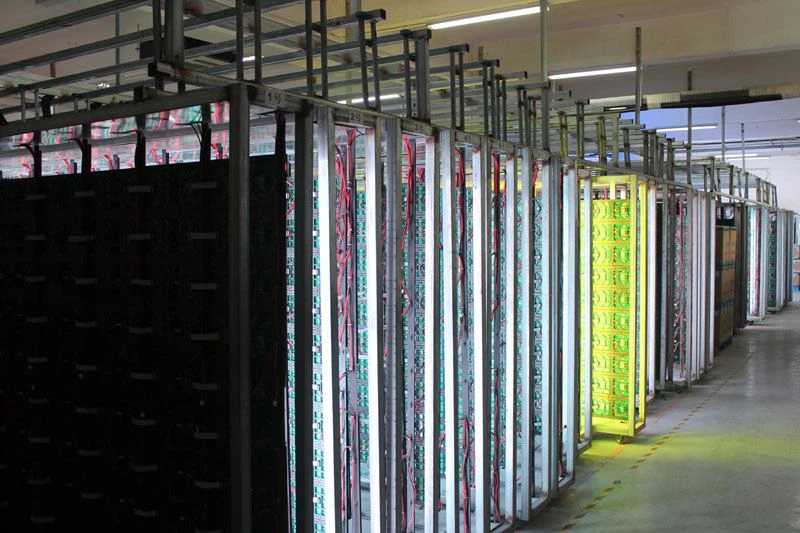
Export-grade LED displays require rigorous validation before deployment. Industry-leading Chinese exporters enforce a strict 72-hour continuous burn-in procedure. This testing phase subjects the panels to extreme high-contrast patterns and white balance stress tests. By operating at full white levels, technicians can isolate and replace unstable diodes before packaging, lowering dead pixel ratios to less than 0.0001% (one in a million).
Operating out of Xiamen provides distinct logistical advantages. As a major Chinese deepwater seaport and international container terminal, Xiamen facilitates direct maritime shipping to North American, European, Middle Eastern, and Asia-Pacific ports. This geographic position lowers inland transport costs, reduces handling-induced vibration risks for delicate optoelectronic modules, and shortens transit schedules.
Deploying robust, application-specific LED billboard systems engineered for environmental resilience and maximum visual impact.
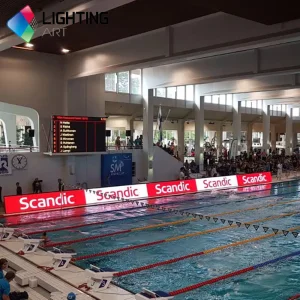
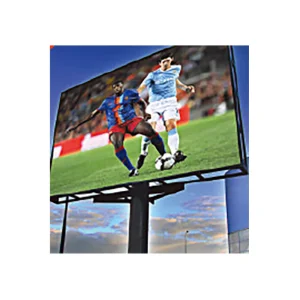
Sports perimeter displays demand ultra-high refresh rates (≥3840Hz) to prevent on-camera flickering. Incorporating soft rubber top cushions and flexible louvers protects players during collisions and shields the LED diodes from impact. Additionally, dual power and signal backups guarantee uninterrupted operation during global live broadcasts.
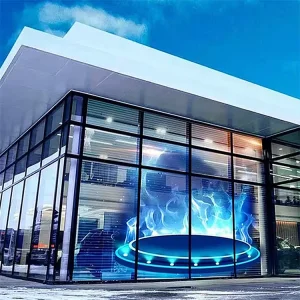
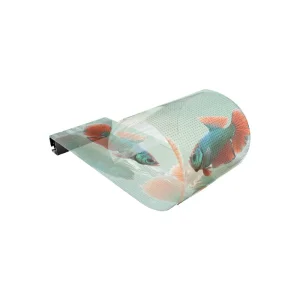
Leveraging high-transparency film and glass curtain wall displays preserves natural light transmission within high-rise buildings. Operating at over 70% transparency, these light weight solutions adhere directly to window panels. This design eliminates the need for heavy structural support frames, simplifying urban zoning approvals.
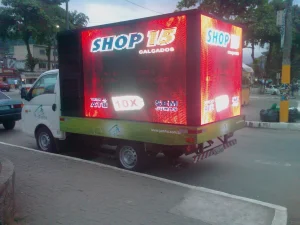
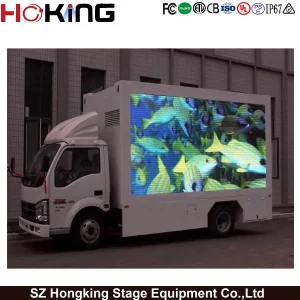
Mobile billboards are engineered to withstand road vibrations and variable power outputs. Featuring shock-absorbent mounting frames, wide input-voltage tolerance (110V - 240V), and integrated GPS/4G content distribution systems, these units provide flexible out-of-home advertising capabilities across diverse metropolitan zones.
Use this specification matrix to match your site configuration requirements with optimal LED pixel pitches and brightness thresholds.
| Application Scenario | Optimal Pixel Pitch | Required Brightness | Recommended Viewing Distance | Ingress Protection (IP) |
|---|---|---|---|---|
| Indoor Broadcast & Control Room | P1.2 - P1.8 | 600 - 1,000 Nits | ≥ 1.5 Meters | IP30 (Front/Rear) |
| Stage Rental & Event Backdrop | P2.6 - P3.91 | 1,000 - 1,500 Nits | ≥ 3.0 Meters | IP43 Indoor / IP65 Outdoor |
| Outdoor Storefront / Retail Wall | P3.0 - P5.0 | 5,000 - 6,500 Nits | ≥ 5.0 Meters | IP65 (Front) / IP54 (Rear) |
| Roadside Digital Billboards (DOOH) | P6.0 - P10.0 | 6,500 - 8,500 Nits | ≥ 10.0 Meters | IP65 (Front) / IP65 (Rear) |
| Stadium Perimeter Boarding | P8.0 - P16.0 | 6,000 - 7,500 Nits | ≥ 12.0 Meters | IP66 Front Protection |
Future-proof engineering choices that protect capitalization and extend the operating life of digital screen investments.
Traditional Surface Mount Devices (SMD) expose diode leads to environmental moisture and physical impacts. Advanced systems are shifting to Chip-on-Board (COB) and Glue-on-Board (GOB) architectures. GOB applies a transparent epoxy layer across the module surface, providing protection against impact, moisture, dust, and electrostatic discharge (ESD). This advancement lowers maintenance costs and enables small-pixel-pitch displays to perform reliably in demanding, high-traffic environments.
In standard common anode setups, red, green, and blue diodes share the same supply voltage (typically 5V), resulting in wasted energy released as heat by the red diode. In contrast, common cathode architectures supply dedicated voltages to the individual color elements (e.g., 2.8V for Red, 3.8V for Green and Blue). This design reduces operating heat by up to 30%, lowers overall power consumption, and extends the lifespan of the diodes by minimizing thermal stress.
Modern display networks require centralized diagnostics. Exporters integrate smart card monitors that track cabinet temperature, internal humidity, power supply statuses, and physical door breaches. Using cloud-based management systems, network operators can identify pixel failures, schedule automated brightness adjustments based on ambient light sensors, and diagnose issues before sending service technicians to the site.
Explore our specialty displays, including stadium-specific perimeter panels, mobile-mounted units, and transparent glass systems.
Get answers to critical technical questions regarding the configuration, operation, and maintenance of industrial-grade LED displays.
 LYRA LED