Discover our range of advanced commercial displays featuring extreme contrast, wide color gamut, and resilient thermal architectures designed for continuous multi-environment deployment.
A technical guide to contrast ratios, peak luminance, bit depth, and metadata standards shaping the next generation of professional screens.
High Dynamic Range (HDR) is not just a marketing buzzword; it represents a fundamental paradigm shift in how digital displays handle luminance, color space, and contrast. Unlike Standard Dynamic Range (SDR), which caps peak brightness at approximately 100 to 300 nits and relies on the legacy Rec. 709 color gamut, modern HDR displays deliver a visual experience that closely mirrors human perception. By expanding the range between the darkest shadows and the brightest highlights, HDR presents details that would otherwise be lost to clipping or crushing.
To qualify as a true high-end HDR display, an LED wall must excel in several specialized technical dimensions:
| Performance Metrics | Standard Dynamic Range (SDR) | HDR10 / HDR10+ Standard | Dolby Vision / Advanced Master HDR |
|---|---|---|---|
| Color Gamut Coverage | Rec. 709 (approx. 35% of visible spectrum) | DCI-P3 (approx. 54% of visible spectrum) | Rec. 2020 (approx. 75.8% of visible spectrum) |
| Grayscale Bit Depth | 8-bit (16.7 Million Colors) | 10-bit (1.07 Billion Colors) | 12-bit to 16-bit (Up to 281 Trillion Colors) |
| Luminance range (Nits) | 100 - 450 Nits | Up to 1,000 - 4,000 Nits | Up to 10,000 Nits (Theoretical Peak) |
| Metadata Protocol | None (Static mapping) | Static (SMPTE ST 2086) / Dynamic (SMPTE ST 2094) | Dynamic Metadata (Frame-by-frame mapping) |
Combining structural cluster efficiency with over two decades of strict quality control and full product customization.
LYRA, established in 2003 in Xiamen China, has been engaged in LED industry for more than 20 years. Our dedication to innovation and quality has made us a trusted leader in the industry.
We started as a small operation, but now have become one of the leading suppliers in the LED Display industry in China. The combination of high-quality products, excellent customer service, and competitive pricing has earned us the trust and loyalty of our customers.
Our manufacturing complex utilizes state-of-the-art fully automated Surface Mount Technology (SMT) lines. By clustering chip testing, wire bonding, encapsulation, and calibration under one roof, we eliminate intermediate supply chain delays and maintain absolute control over binning processes. This ensures pixel-to-pixel uniformity across vast visual surfaces.
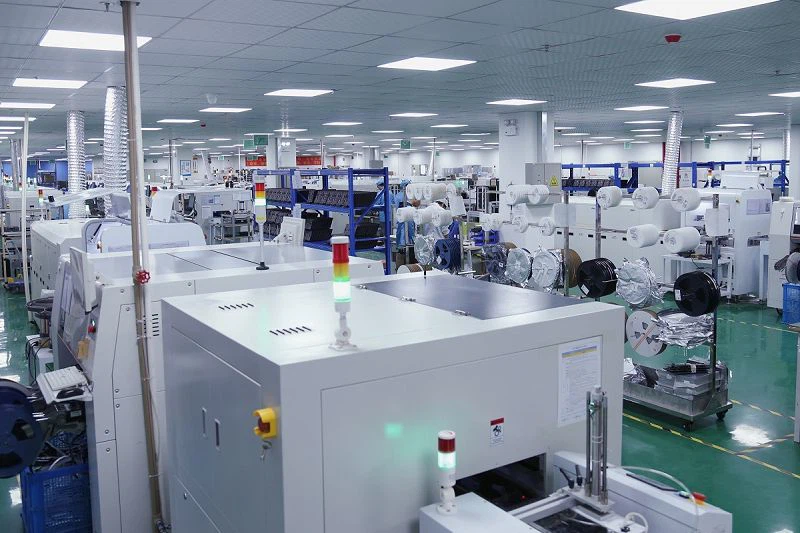
LYRA provides comprehensive solutions and industry-leading quality. We also supports 100% customization of all kinds of displays, we can bring your ideas to life. From adjusting brightness and choosing lamp beads, to shaping it uniquely, we tailor every detail to your needs. Let's create your perfect display.
We believe in building strong, win-win partnerships and warmly invite you to contact us for customized solutions and to explore cooperation opportunities. Our field application engineers are ready to support your systems integration from concept validation to remote calibration.
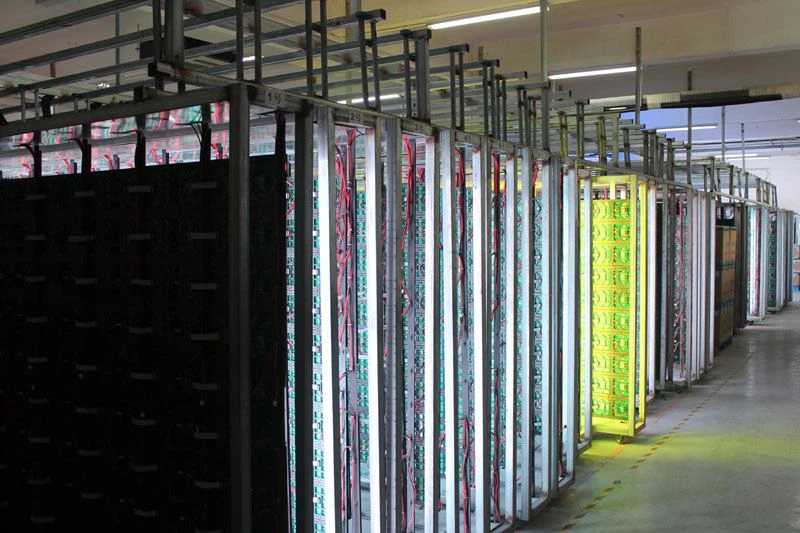
Bridging the gap between engineering specifications and real-world deployment across specialized high-demand sectors.
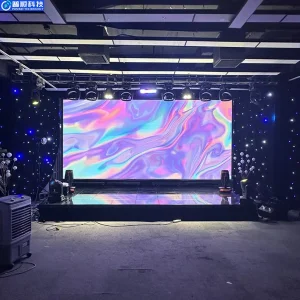
Our ultra-fine pitch HDR screens, featuring high-refresh driver ICs (up to 7680Hz), allow motion picture studios to project real-time background environments. This eliminates post-production green-screening, prevents on-camera moiré patterns, and preserves dynamic lighting reflections directly onto the actors.
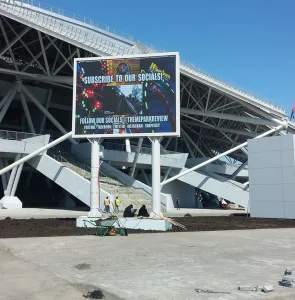
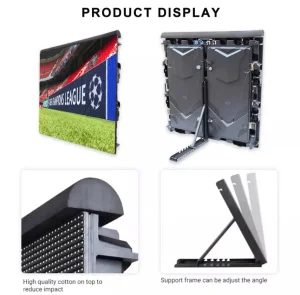
For stadium perimeter installations, our systems provide high-contrast display panels designed to withstand varying ambient light. Using impact-resistant magnesium cabinets, soft bumper tops, and IP67 weather-proofing, our displays ensure athlete safety while protecting dynamic sponsor advertisements.
Mission-critical operations rely on continuous 24/7 display uptime. Our COB (Chip-on-Board) screens provide wide viewing angles (170°/170°), high impact resistance, dustproof surfaces, and dual power/signal redundancy configurations. This ensures constant operations with zero data loss or screen blackouts.
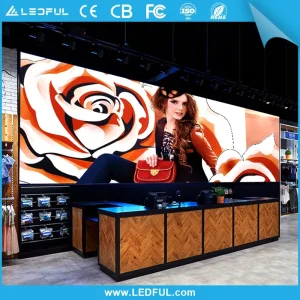
Deploying visual technology at scale requires matching display specifications to the ambient environment. In luxury retail boutiques, fine pitch screens render the deep blacks and precise highlights of dynamic brand content. For smart city integrations, our outdoor displays adjust brightness dynamically based on real-time solar tracking sensors, maximizing energy efficiency while ensuring visibility.
The convergence of Mini/MicroLED, Common Cathode energy systems, and COB packaging protocols.
Conventional LED displays utilize Common Anode architectures, supplying a uniform voltage (typically 5V) to red, green, and blue LED chips. This leads to energy loss as heat, since red chips require lower driving voltages. Our next-generation displays feature Common Cathode technology, distributing power independently to each colored subpixel. This reduces operating temperatures by up to 15°C and cuts power consumption by up to 30%, extending the display's operating lifespan.
Traditional Surface Mount Devices (SMD) package diode chips inside a plastic housing soldered directly to the PCB. In contrast, Chip-on-Board (COB) technology mounts raw LED chips directly to the circuit board before sealing the assembly with an optical epoxy resin. By removing standard lead wires and plastic cups, COB structures deliver high physical protection against impact, static discharge, and moisture, while enabling pixel pitches below 0.9mm.
When calculating Total Cost of Ownership (TCO), buying cheaper Common Anode screens often leads to higher long-term costs due to continuous air conditioning requirements and pixel repair fees. Investing in Common Cathode and COB architectures helps reduce electricity overheads and maintenance costs, making them ideal for corporate campuses and public transit terminals.
Ensuring global installation readiness through international standards, component tracking, and rigorous environmental testing.
As a global supplier, LYRA designs and builds visual systems to meet the regulatory compliance and engineering requirements of international markets:
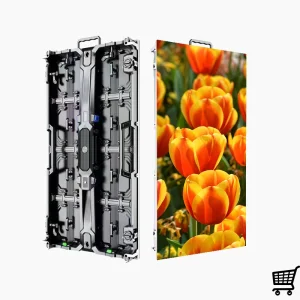
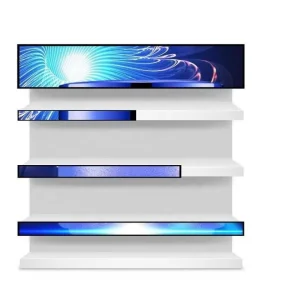
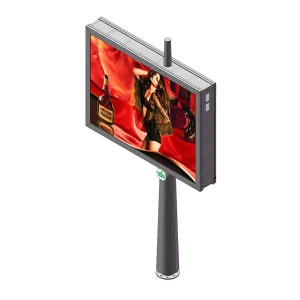
Explore our highly customized display formats, designed for creative retail visual installations, interactive public transits, and large-scale sports arenas.
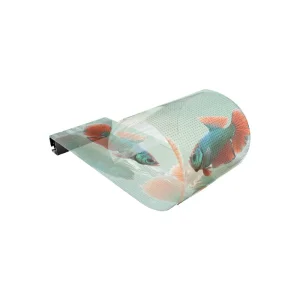
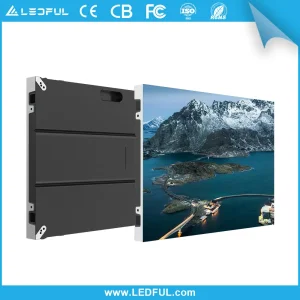
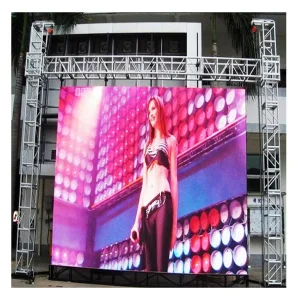
In-depth engineering answers to common technical queries from systems integrators and procurement departments.
Static HDR, such as HDR10, applies a single metadata profile across the entire video. The brightest scene establishes the dynamic range limit, which can cause dark scenes to appear flat or lack shadow detail. In contrast, dynamic HDR formats (like HDR10+ or Dolby Vision) send frame-by-frame metadata. This allows the system to adjust brightness, contrast, and color mapping on the fly. To support dynamic HDR, displays must feature compatible LED video processors and high-performance driver ICs capable of rendering fast frame rate changes without flicker.
COB eliminates the plastic housing used in traditional SMD packages by mounting the semiconductor chips directly to the PCB. This design offers several advantages: first, it permits smaller pitch sizing (sub-0.9mm) without solder bridges. Second, encapsulation inside an epoxy resin layer protects diodes from humidity, dust, and physical impact. Additionally, direct PCB contact improves heat dissipation, resulting in higher reliability and reduced thermal degradation.
Standard cameras capture footage using high shutter speeds. If an LED screen has a low refresh rate, the camera sensor captures the display while its pixels are cycling off, resulting in dark bands known as moiré patterns or scan lines. By utilizing driver ICs that achieve refresh rates of up to 7680Hz and grayscale levels up to 16-bit, our screens ensure consistent illumination during recording. This configuration makes them ideal for broadcast news rooms, virtual film sets, and professional arenas.
LYRA provides custom engineering options across all product categories. We modify pixel pitches to meet specific viewing distances and customize cabinet shapes (including curved, right-angled, or spherical designs) to fit existing building structures. Additionally, we tailor brightness configurations from 800 nits to 10,000 nits, adapt refresh rates, optimize heat dissipation systems, and build redundant setups for critical command and control systems.
We use strict LED binning, sourcing chips from the same production run to ensure consistency in wavelength and luminosity. Following SMT assembly, each display panel undergoes factory calibration using high-resolution optical cameras. These cameras measure individual pixel output and apply calibration offsets directly to the module’s EEPROM. This process ensures color and brightness consistency across the entire wall.
All LYRA display panels are certified under CE, FCC, RoHS, and ETL guidelines. Before shipping, each batch undergoes strict environmental testing, including 72-hour burn-in runs, thermal shock testing between -40°C and +85°C, high-humidity storage tests, and vibration simulation. These quality control steps ensure our products arrive ready for immediate, reliable deployment.
 LYRA LED