Large LED screens are valuable, delicate, and surprisingly vulnerable during transport. Their cabinets may look solid, but receiving cards, LED modules, power supplies, and calibration data can suffer from vibration, moisture, or careless stacking. This guide explains how to transport large LED screens safely, from factory inspection to final installation.
UNCTAD’s Review of Maritime Transport reports that more than 80% of global merchandise trade by volume moves by sea. That statistic matters because ocean transport exposes equipment to humidity, salt air, port handling, and long periods of vibration. The World Bank’s 2023 Logistics Performance Index ranked China 19th among 139 economies, with a score of 3.7. Strong logistics help, but they do not replace correct packaging. As Glyn Hughes, former Director General of The International Air Cargo Association, has said, “Air cargo is a team sport.” Safe delivery also depends on manufacturers, freight forwarders, handlers, and installers.
A reliable shipping plan starts with a documented pre-shipment inspection. Photograph every cabinet, label each flight case, and record serial numbers. Use anti-static foam, reinforced corners, moisture barriers, and shock or tilt indicators. Keep screens upright unless the manufacturer approves another position. Avoid placing heavy accessories above LED modules. Check crate dimensions against the carrier’s loading limits. For sea freight, include desiccant and humidity indicators. For air freight, confirm battery, power-supply, and dangerous-goods documentation requirements.
The weakest point is often human handling. A perfect crate cannot correct careless unloading. Inspect the shipment before signing, and report hidden damage immediately. ISTA testing principles can improve packaging decisions, but real routes still vary. That uncertainty deserves attention. Safe transport is not one box or one document; it is a chain of small, verifiable controls.
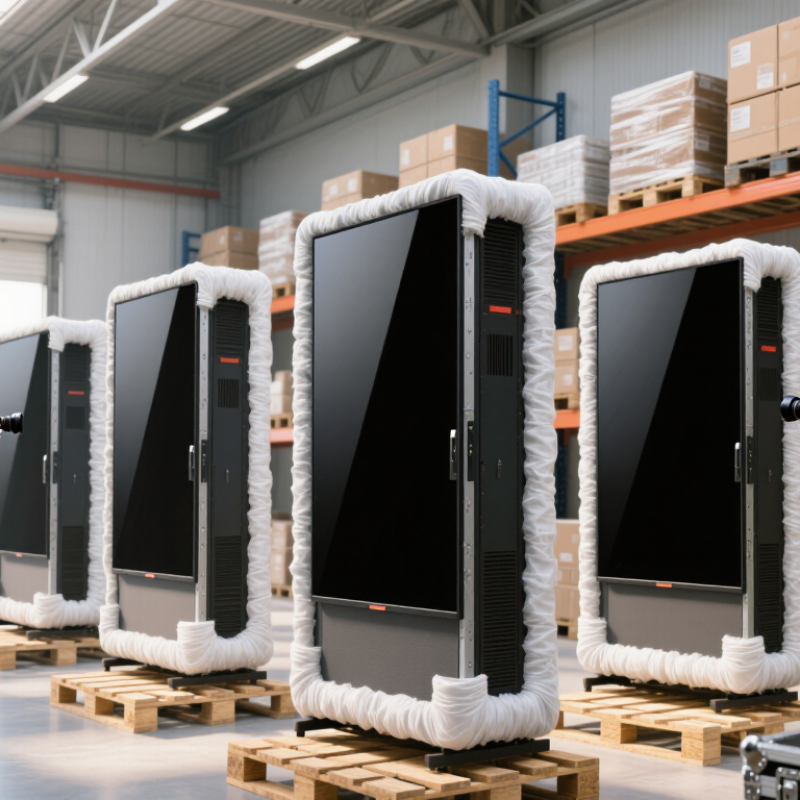
Assess LED Screen Size, Weight, and Transportation Requirements
How to Safely Transport Large LED Screens from China?
Large LED screens require more than a simple panel count. Measure each cabinet, connector, frame, power unit, and protective case. Record packed length, width, height, gross weight, and center of gravity. A frequent mistake is measuring the screen only. The flight case often adds significant volume and weight. IATA air-cargo guidance commonly calculates volumetric weight by dividing cubic centimeters by 6,000. For example, a 120 × 80 × 70 cm case creates 112 kg of chargeable volume weight, even if its scale weight is lower. Choose ocean freight when delivery time allows. UNCTAD’s Review of Maritime Transport 2024 states that over 80% of global merchandise trade by volume travels by sea.
Tips: Photograph every measurement. Mark fragile corners and lifting points. Use moisture barriers, shock indicators, and internal foam spacing. ISTA 3A testing evaluates drops, vibration, and compression, but real shipments may face rough handling and temperature changes. Confirm whether the packing case fits standard container doors and warehouse lifts. Check pallet height too. It is easily forgotten.
For export planning, prepare a packing list showing cabinet quantity, case dimensions, net weight, gross weight, and total cubic volume. Separate LED modules from vulnerable receiving cards when practical. Ask the forwarder for both actual and dimensional-weight quotations. A rushed estimate can become an expensive correction. The better method is simple: measure the fully packed cargo, then test the route against handling equipment, stacking limits, and delivery timing.
How to Safely Transport Large LED Screens from China?
Estimated Packed Mass by LED Screen Size
This planning chart estimates the packed mass of common LED screen sizes using
500 × 500 mm panels weighing approximately 8 kg each, plus 20% for mounting
frames, protective materials, and crating. Confirm the final weight, crate
dimensions, and volumetric weight with the supplier before booking transport.
| Screen Size |
Screen Area |
Estimated Packed Mass |
Typical Transport Planning |
| 2 m × 1 m |
2 m² |
77 kg |
Air freight or small road shipment |
| 3 m × 2 m |
6 m² |
230 kg |
Palletized road or air freight |
| 4 m × 3 m |
12 m² |
461 kg |
Palletized freight with forklift access |
| 6 m × 3 m |
18 m² |
691 kg |
Freight forwarding with reinforced crating |
Choose Suitable Packaging and Protective Materials
Transporting large LED screens safely starts with packaging designed around their weak points. The display surface, cabinet corners, connectors, and power units need different protection. Remove detachable parts when possible, then wrap each module in clean, non-abrasive foam. Closed-cell EPE foam absorbs small impacts without shedding dust. For sensitive circuit boards, use anti-static bags rather than ordinary plastic film. Easy to miss.
Use molded foam or thick corner guards around every cabinet edge. Leave no direct pressure on the LED pixels. A rigid plywood crate with internal braces helps prevent twisting during lifting and road vibration. Add a moisture barrier, desiccant packs, and a humidity indicator for sea or rainy routes. The crate should hold the screen firmly, but not crush the foam. Overtightening straps can create hidden panel damage. This happens. Use shock and tilt indicators outside the crate, and mark the lifting points clearly.
Before sealing, photograph the screen, cable positions, foam placement, and crate condition. A packing checklist makes inspections more reliable. From practical handling, small gaps are often more dangerous than a slightly heavier crate. Still, packaging should be tested against the route, not guessed from warehouse conditions. Ask the forwarder about stacking, crane handling, temperature, and expected vibration. One honest weakness remains: recycled cushioning may vary in density. It can look strong, yet compress unevenly. Test a sample before packing the full shipment.
Select the Right Shipping Method and Prepare Documents
Transporting large LED screens from China starts with choosing the correct shipping method. Sea freight suits bulky shipments because it offers lower costs and steadier capacity. UNCTAD’s Review of Maritime Transport 2023 states that over 80% of global merchandise trade by volume moves by sea. For urgent displays, air freight reduces transit time, but its dimensional weight can increase costs sharply. Measure each flight case, not only the screen itself.
Documents deserve equal attention. Prepare a commercial invoice, packing list, bill of lading or air waybill, and certificate of origin when required. The invoice should show accurate product descriptions, quantities, values, and the correct HS code. Confirm destination customs requirements before loading. The World Bank’s Logistics Performance Index 2023 highlights customs efficiency and shipment tracking as important logistics factors. A missing document can delay a perfectly packed screen. I once underestimated the importance of matching carton numbers with the packing list. That mistake was avoidable.
Tips: Photograph every crate before collection. Record dimensions, gross weight, and serial numbers. Use moisture barriers, shock indicators, and corner protection. Ask the forwarder about port handling, transshipment, insurance, and delivery appointments. Sea freight is not automatically safer. Air freight is not always faster if paperwork is incomplete. Recheck the consignee’s name and address twice. Small errors create large delays.
Load, Secure, and Handle the LED Screen Safely
Large LED screens need careful loading, securement, and handling from the factory to the installation site. Their cabinets may look rigid, but modules, connectors, and receiving cards can suffer from vibration or pressure. Use a fitted flight case or reinforced crate with foam protection around corners. Keep panels in the manufacturer’s approved orientation. Do not place heavy tools on them. Before loading, record the screen’s weight, dimensions, center of gravity, and lifting points.
Forklift operators should keep forks fully inserted and move slowly across uneven ground. Never drag a cabinet across concrete. During road transport, use blocking, friction mats, edge protectors, and rated straps. The Federal Motor Carrier Safety Administration requires tie-downs to provide an aggregate working load limit of at least 50% of the cargo weight. That is a minimum, not a complete loading plan. Straps should press against the frame, never the LED modules. Recheck tension at the first safe stop.
The 2023 U.S. Bureau of Labor Statistics Census recorded 1,495 fatal injuries among transportation and material-moving workers. The number includes many industries, but it shows why rushed handling deserves attention. Keep people away from suspended cabinets and forklift paths. Use two trained handlers for manual movement. A lifting plan is better than improvised strength. Still, even experienced crews sometimes over-tighten straps. I would rather accept a short delay than discover cracked modules after arrival. Record case condition, shock indicators, and moisture exposure before unloading. Inspect every cabinet before powering it.
How to Safely Transport Large LED Screens from China? - Load, Secure, and Handle the LED Screen Safely
| Transport Stage |
Safety Dimension |
Recommended Practice |
Typical Requirement |
Inspection or Control Point |
| Before Loading |
Screen Preparation |
Switch off the display, disconnect power, remove detachable accessories, and protect exposed LED modules with clean, non-abrasive covers. |
Power off completely |
Confirm that the power indicator is off and that no loose parts remain on the cabinet. |
| Before Loading |
Moisture Control |
Load only dry equipment. If the screen has been exposed to rain or condensation, allow it to dry fully before packing. |
Dry exterior and connectors |
Check cabinets, signal ports, power connectors, and packing materials for visible moisture. |
| Packing |
Protective Packaging |
Use fitted flight cases or rigid crates with internal padding. Keep the LED face separated from hard surfaces and sharp edges. |
Rigid case with cushioning |
Verify that the cabinet cannot slide, rotate, or contact the case wall during normal handling. |
| Packing |
Stacking Arrangement |
Place cabinets in the orientation specified by the packaging design. Do not stack beyond the case or crate rating. |
Follow packaging limit |
Check case labels, load limits, center of gravity, and the total height of the packed load. |
| Loading |
Weight Distribution |
Distribute cases evenly across the vehicle floor and place heavier cases below lighter ones whenever possible. |
Within vehicle axle limits |
Compare the packed weight with vehicle payload, floor loading, and axle-load limits. |
| Loading |
Manual Handling |
Use a pallet truck, liftgate, forklift, or other suitable equipment for heavy cases. Keep hands away from pinch points. |
Trained operators only |
Confirm the lifting equipment capacity exceeds the packed-case weight and that forks are correctly positioned. |
| Securing |
Load Restraint |
Secure cases with rated straps, blocking, or load bars. Protect case surfaces from strap abrasion and avoid compressing the LED face. |
No visible movement |
Perform a push test and confirm that restraints remain tight without deforming the case. |
| Securing |
Vibration and Impact |
Use cushioning between cases where needed, prevent contact with vehicle walls, and avoid placing loose tools or cargo on top. |
No hard contact points |
Inspect corners, latches, wheels, handles, and the protective cover for impact marks before departure. |
| During Transit |
Environmental Protection |
Keep cargo protected from rain, dust, direct sunlight, and extreme temperature changes. Do not leave cases uncovered outdoors. |
Covered and dry cargo area |
Check weather conditions and inspect restraints after stops, road vibration, or route changes. |
| Unloading |
Safe Removal |
Unload on a level, dry surface. Remove restraints gradually and keep the case stable while opening doors or ramps. |
Level unloading area |
Use wheel chocks or brakes where applicable and maintain a clear path for personnel and equipment. |
| At Destination |
Condition Check |
Photograph packaging before opening, record visible damage, and compare cabinet quantities and serial records with shipping documents. |
Document before unpacking |
Report damage promptly to the carrier or logistics provider and retain packaging for inspection. |
| Before Operation |
Acclimatization and Testing |
Allow equipment to reach the installation environment before powering on when condensation may be present. Test cabinets progressively. |
No condensation visible |
Inspect connectors and modules, then perform a low-risk functional test before full installation. |
Safety note: Actual payload limits, lifting points, case capacity, tie-down requirements, and handling procedures must follow the equipment documentation, packaging specifications, vehicle regulations, and instructions from qualified personnel.
Conclusion
Transporting a large LED screen safely begins with a careful assessment of its dimensions, total weight, structural design, and handling requirements. Before shipment, remove or secure detachable components, protect delicate modules with anti-static and moisture-resistant materials, and use custom-fitted crates with sufficient cushioning. The packaging should prevent vibration, impact, dust, and movement during loading and transit. Clear labels indicating orientation, lifting points, and fragile contents can also reduce handling risks.
To understand how to transport large LED screens safely, select a shipping method that matches the screen’s size, urgency, destination, and available handling equipment. Prepare accurate shipping documents, verify crate measurements, and confirm loading procedures with the carrier. During loading, distribute weight evenly, use suitable lifting tools, and secure every crate with straps or restraints. After delivery, inspect the packaging for damage, document any concerns, and check the screen’s modules, connections, power supply, and frame before final installation and testing.

 LYRA LED