How to Choose a Mobile LED Truck and Why They Are Trending?

Time:2026-11-03 Author:Henry
0%

A mobile LED truck turns a street, event entrance, or parking lot into a moving display. That flexibility helps explain why mobile LED trucks are trending: brands can bring bright, changeable messages closer to specific audiences. Yet visibility alone does not guarantee results. A truck can attract glances and still miss its audience.

Marketing expert Seth Godin captures the value of a strong message: “Marketing is no longer about the stuff that you make, but about the stories you tell.” For campaign planners, that means matching the screen, route, and content to one clear goal. A high-resolution display may suit close viewing at a festival. A larger screen may work better beside a broad event space. Ask about pixel pitch, brightness, power use, weather protection, and the crew’s setup experience. Details matter.

Choosing well also means checking the vehicle’s dimensions, screen orientation, maintenance support, and content scheduling tools. Request a live demonstration, not just a polished video. Watch how readable the screen remains in daylight and from different angles. Confirm local operating requirements before planning routes or events. Still, specifications cannot predict every crowd’s response. That part takes testing—and sometimes a rethink. A modest pilot can reveal whether people notice, understand, and act on the message before a larger investment.
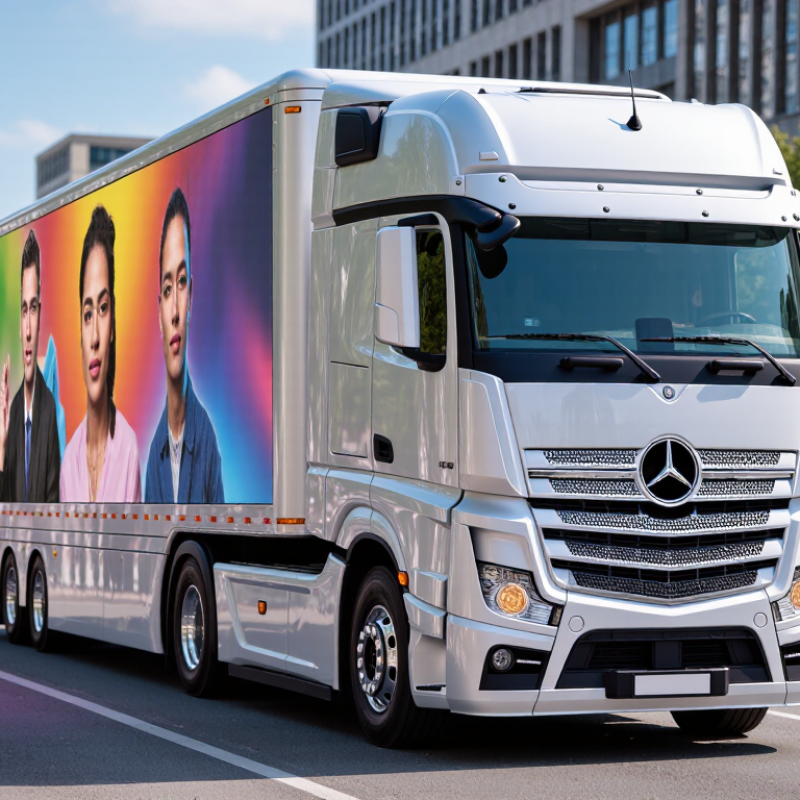
How to Choose a Mobile LED Truck and Why They Are Trending?

What a Mobile LED Truck Is

A mobile LED truck is a road vehicle fitted with large electronic screens that display video, images, or live messages. Unlike a fixed billboard, it can travel between locations or remain parked near an event, storefront, or busy pedestrian route. The screens are powered by the vehicle’s electrical system or an onboard generator, and operators typically manage brightness, playback, and display schedules from inside the cab or remotely. Up close, the format is simple: a bright screen, a moving vehicle, and a message repeated where people can actually see it. It is not magic.

The format sits within the wider digital out-of-home advertising market. The Out of Home Advertising Association of America reported that U.S. out-of-home advertising generated $9.1 billion in 2023, with digital formats accounting for about one-third of revenue. That figure covers digital out-of-home broadly, not mobile LED trucks alone, so it should not be read as a truck-specific growth measure. A truck’s value depends on route, screen visibility, audience, and dwell time. A display passing too quickly may leave little impression; a parked truck can be more readable, but may reach fewer people. Field conditions matter, too. Sun glare, traffic, and viewing angles can change what an audience sees. A route map is useful, though real streets rarely behave like a spreadsheet.

How to Choose a Mobile LED Truck: Match Pixel Pitch to Viewing Distance

A mobile LED truck is a vehicle fitted with a large LED display that can bring video and messages to different locations. As a rough planning rule, a screen’s pixel pitch in millimeters is often matched to a minimum viewing distance in meters—for example, P5 at about 5 meters. Choose a pitch that suits how close the audience will be; actual visibility also depends on content, brightness, and surroundings.

How Mobile LED Trucks Display Content

How Mobile LED Trucks Display Content

A mobile LED truck turns digital files into images through thousands of small light-emitting diodes. Red, green, and blue pixels combine to create text, photos, and video across the screen. A media player sends each frame to a control processor, which distributes the signal to LED panels mounted on the vehicle. When panels are aligned properly, the picture looks continuous, even at close range.

Content is usually prepared at the screen’s actual resolution, then loaded through a wired connection or wireless network. An operator can schedule different messages for specific locations or times. Brightness sensors may adjust the display as daylight changes, helping keep details visible without making the screen unnecessarily harsh. Keep text brief. People may see it for only a few seconds from a moving sidewalk or passing vehicle.

A reliable setup also depends on power, cooling, and signal checks. Before a route, crews can inspect panel connections and preview the full playlist. This small step catches awkward cropping or unreadable fine print. I have found that a technically sharp video can still communicate poorly if its message is crowded. Wireless updates are convenient, but coverage can fail; keeping approved files on the truck provides a practical backup. Each display system behaves a little differently, so test the content on the actual screen whenever possible.

Key Factors to Consider When Choosing a Mobile LED Truck

Choosing a mobile LED truck starts with the job it must do. These trucks appeal to event teams because one vehicle can bring a large display to changing locations. For a street campaign, visibility, safe parking, and quick setup may matter more than maximum screen size. Check pixel pitch against viewing distance: a screen across a plaza needs different specifications from one beside a queue. Ask for daytime brightness figures and how brightness is adjusted after dark. Excessive brightness can distract people and waste power.

Next, assess the vehicle and its operating details. Confirm payload capacity, generator output, runtime, ventilation, and access to service parts. Request a setup demonstration, not just a product video. Watch how long leveling, cable checks, and content loading take. Check readability from your usual viewing angles. A compact truck can fit tighter streets, but may limit screen area. There is no perfect configuration; testing it on a typical route is still worthwhile.

Tips: Match screen size to viewing distance, then compare operating costs, not only purchase price. Ask for written figures on runtime, weather protection, warranty coverage, and maintenance intervals. Bring a sample video with small text and moving scenes to the demo. If text looks fuzzy from the curb, reconsider. Leave time for setup, too; schedules often look cleaner on paper.

Common Applications of Mobile LED Trucks

Mobile LED trucks bring screens to places where audiences already gather. Event organizers use them at outdoor festivals, parades, and sports events to show schedules, live footage, or safety updates. In a busy park, a high-mounted display can remain visible above the crowd. Useful, but not magic.

Retailers may park a truck near a shopping district to announce a store opening or a limited-time offer. Local organizations can use one for community notices, public-service information, or event reminders. Their mobility suits short campaigns and changing locations. However, a screen can distract drivers or feel intrusive if it is poorly positioned, too bright, or used for too long.

Tips: Match screen size and brightness to the viewing distance and daylight. Plan a safe stopping area, check power needs, and keep messages brief. Test the route beforehand; narrow streets and tree cover can limit visibility. Be ready to adjust—the first location may not work as expected.

Why Mobile LED Trucks Are Trending

Mobile LED trucks are trending because they bring bright, moving screens to places where audiences already gather. A vehicle can travel through a shopping district, then park near an outdoor event. That flexibility matters. It lets organizers match a message to a time and location, rather than wait for people to pass one fixed sign. Large, high-contrast visuals can stand out in daylight. Short animations suit busy streets, where viewers may glance for only seconds. At a small event, the screen can also show schedules, directions, or last-minute changes.

Digital campaigns are easier to refresh than printed displays. A team might update a weekend promotion before the truck leaves its depot, then review route times, screen operation, and audience response. Still, mobility alone does not guarantee impact. Crowded roads, poor placement, glare, and fast-moving text can make a screen hard to read. Trade-offs remain. A large display uses power, and a poorly planned route can add traffic and noise. In practical planning, simple messages and safe, considerate stopping points often work better than constant motion. Some campaigns may still feel intrusive; that deserves honest review, not a glossy claim.

How to Choose a Mobile LED Truck and Why They Are Trending? - Why Mobile LED Trucks Are Trending

Decision Factor What to Check Practical Guidance Why It Matters / Why Demand Is Growing
Screen size and pixel pitch Display dimensions, resolution, and pixel pitch—the distance between neighboring LED pixels. Choose based on typical viewing distance: finer pixel pitch generally gives a sharper image at closer range. Compare the complete screen resolution, not pitch alone. A suitable screen can make messages easier to read in busy streets, at events, and from moving traffic.
Brightness and visibility Maximum brightness, automatic brightness control, viewing angle, and performance in direct sunlight. Ask for measured specifications and a live outdoor demonstration. Confirm that brightness can be reduced for evening use. The display must remain legible in changing outdoor light while avoiding unnecessarily high brightness at night.
Vehicle and screen configuration Truck dimensions, one-sided or multi-sided display, lifting mechanism, stabilizers, and road access requirements. Match the vehicle to the planned route and venues. Check payload, height, turning clearance, parking, and setup requirements. A mobile format can bring a campaign to multiple locations without relying on a fixed installation.
Power and operating time Power source, generator capacity, fuel use, battery options, and operating time under the intended load. Request power-consumption figures for realistic content and brightness settings. Confirm refueling, ventilation, and backup procedures. Reliable power is essential for scheduled campaigns and events; lower-energy options may help reduce operating costs and emissions.
Content and remote control Supported file formats, scheduling tools, connectivity, remote updates, and local playback if the connection drops. Test content updates before purchase or hire. Check how operators verify which creative is displayed and when. Digital content can be changed without replacing printed materials, making it easier to adapt messages by time or location.
Weather protection and maintenance Outdoor protection ratings, temperature limits, service access, spare parts, warranty, and repair response time. Review the documented protection rating and maintenance schedule. Confirm who handles roadside or screen faults during operation. Outdoor equipment must cope with changing conditions, and accessible servicing helps reduce downtime.
Safety and local rules Vehicle roadworthiness, driver requirements, permitted routes, event permissions, screen movement, and rules for illuminated displays. Check requirements with the relevant transport and local authorities before planning a route or event. Rules vary by location. Mobile advertising operates in public spaces, so compliance and safe driving practices are part of the selection process.
Campaign fit and measurement Target locations, route planning, event schedule, audience goals, and available reporting methods. Set measurable objectives in advance. Distinguish verified vehicle or route data from estimated audience exposure. The format is appealing for location-based promotions, public information, product launches, and event support because the display can travel to the audience.

Specifications and operating requirements vary by vehicle, display, and location. Verify supplier documentation and local regulations before making a purchase or booking.

FAQS

How does a mobile LED truck display images?

A media player sends frames to a control processor. Red, green, and blue LEDs combine to form text, photos, and video.

How is display content prepared?

Content is usually set to the screen’s resolution, then transferred by cable or wireless network. Check the preview for awkward cropping.

Can the screen change brightness automatically?

Brightness sensors may adjust the display as daylight changes. Test the screen outside; details can look different in strong sun.

What content works best for passing viewers?

Use brief messages, large text, and clear images. Keep it brief. People may only glance at the screen for a few seconds.

Where are mobile LED trucks commonly used?

They can show schedules, live footage, or updates at festivals, parades, and sports events. A high screen may remain visible above a crowd.

Can these trucks promote a local event or opening?

Yes. They can carry event reminders or opening announcements near shopping districts and community gathering places. The location still matters.

What should crews check before driving a route?

Inspect panel connections, power, cooling, and signal. Preview the full playlist, then check the planned route for narrow streets or tree cover.

What if a wireless update or location does not work?

Coverage may fail. Keep approved files on the truck as a backup, and be ready to change locations if visibility is poor. The first choice may be wrong.

Conclusion

A mobile LED truck combines a vehicle with a large digital display, allowing visual content to travel directly to different locations. Its screens show images, video, and messages from onboard or remotely managed systems, making it possible to adapt content to an event, audience, or setting. When choosing a truck, consider screen size and clarity, viewing distance, power needs, weather resistance, content controls, vehicle mobility, and operating costs. The right setup should suit both the message and the places where it will be used.

Mobile LED trucks can support product launches, community events, outdoor performances, public information campaigns, and roadside promotions. Their flexibility helps organizers bring a display to audiences rather than relying on a fixed location. This is a key reason why mobile LED trucks are trending: they combine visibility, mobility, and adaptable digital content in one platform. As event planners and businesses seek more engaging ways to reach people in changing environments, these trucks offer a practical option for delivering timely messages.

Henry

Henry

Henry is a dedicated marketing professional with a profound expertise in the company's offerings. With years of experience in the industry, he possesses an impressive understanding of the market dynamics and consumer behaviors that drive success. Henry is committed to sharing his insights through......