In the rapidly evolving world of LED technology, achieving optimal brightness remains a crucial challenge. Dr. Emily Cheng, a leading expert in display technology, emphasizes, "Brightness not only enhances visibility but also improves user engagement." This insight provides a foundation for exploring effective strategies to address the pressing question of how to improve LED display brightness.
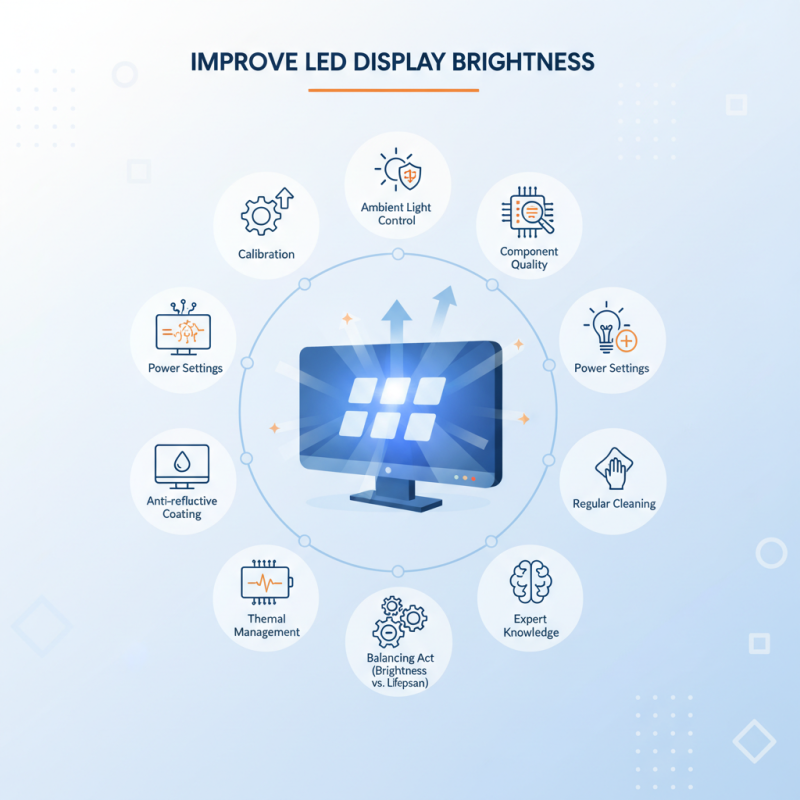
Improving brightness involves careful consideration of various factors. Display settings, environmental lighting, and the quality of the LED components play significant roles. For instance, ensuring proper calibration can make a noticeable difference. Many professionals overlook the impact of reflective surfaces and ambient light, which can diminish the effectiveness of an LED display.
Nevertheless, some methods for increasing brightness come with trade-offs. Overdriving LEDs can boost brightness but may shorten lifespan. Balancing performance and longevity requires informed choices. Addressing the complexities of how to improve LED display brightness is essential for achieving optimal results and ensuring long-lasting displays. By tapping into expert knowledge and adopting practical strategies, users can significantly enhance their LED display experiences.
Understanding LED Display Brightness Metrics
When discussing LED display brightness, understanding metrics is essential. Brightness is often measured in nits, which quantifies luminance. A higher nit value indicates a brighter display. This is important for viewing content in various lighting conditions. Moreover, perceived brightness can be influenced by color and contrast.
To enhance brightness, adjust the display settings. Increasing the backlight can significantly improve visibility. Another tip involves maintaining a clean screen; dust can diminish brightness. Additionally, use high-quality content sources. Poor image quality may not utilize the full potential of your display.
Consider the ambient light around the display. Proper placement can optimize brightness perception. For instance, avoiding direct sunlight can prevent glare and enhance the viewing experience. Regularly reviewing your display setup can help identify areas for improvement. Understanding these metrics and adjustments ensures a better visual performance in various environments.
Identifying Factors Affecting LED Display Brightness
LED display brightness is influenced by several key factors that deserve attention. One significant aspect is the pixel pitch. Smaller pixel pitches generally lead to higher brightness levels. This is critical for outdoor displays, where sunlight can wash out visuals. Inadequate pixel pitch can undermine visibility and clarity. Moreover, the quality of LED chips plays an essential role. Higher-quality chips can produce brighter and more vibrant images. However, not all manufacturers adhere to high standards, leading to variability in output.
Another factor is the power supply. A stable and sufficient power supply ensures the display can achieve its maximum brightness. Fluctuations in power can diminish brightness levels and affect performance. Additionally, the ambient lighting conditions impact perceived brightness. For example, displays in well-lit areas may require peak brightness to be visible. This emphasizes the necessity of considering environmental factors when installing an LED display.
Lastly, heat dissipation mechanisms are crucial. Excessive heat can hinder the brightness of LED displays over time. Proper cooling systems and airflow help maintain optimal performance. Adjustments in design and setup may be necessary to achieve ideal brightness levels. Recognizing and addressing these factors can significantly enhance LED display performance.
Optimizing LED Panel Configuration for Enhanced Brightness
Optimizing LED panel configuration is crucial for achieving
enhanced brightness. A well-configured LED display not only improves visibility
but also increases energy efficiency. According to industry reports, properly configured LED panels can yield brightness levels exceeding
2,000 nits. This is essential for outdoor applications, where sunlight can easily wash out inferior displays.
One effective method involves adjusting the LED driver settings. Drivers influence brightness output directly.
When correctly set, they can notably increase the panel's performance. It’s worth noting that overdriving
can lead to overheating. This situation may diminish lifespan and quality, necessitating regular maintenance checks. In addition, panel orientation plays
a vital role. Displays installed at optimal angles ensure maximum light exposure while minimizing glare.
Color calibration also contributes significantly to brightness optimization. Distorted colors
can make displays appear dimmer. Regular calibration ensures the integrity of color representation. This, in turn,
enhances perceived brightness. However, achieving perfect calibration can be challenging. Technicians often face difficulties in balancing brightness across
different color channels. A more systematic approach might be needed to address these complexities, ensuring that brightness is consistent and impactful.
Utilizing Advanced Technologies for Improved Brightness
Improving LED display brightness is crucial for ensuring visibility in various conditions. Utilizing advanced technologies can significantly enhance performance. One promising method is the use of quantum dot technology. This method improves luminous efficiency by up to 20%, compared to traditional LED solutions. Quantum dots enhance color accuracy and brightness, catering to diverse application needs.
Another approach involves dynamic brightness adjustment algorithms. These algorithms automatically modulate brightness according to ambient light conditions. A recent report found that displays using such technology demonstrated over 30% better visibility in direct sunlight. This adaptability not only enhances user experience but also conserves energy.
Thermal management is another key element for increasing brightness. Properly engineered cooling systems prevent overheating, allowing LEDs to maintain higher output levels. Studies indicate that effective thermal solutions can improve LED lifespan by 50%. These impressive gains emphasize the need to reflect on current manufacturing techniques. Sustainable practices are necessary as we navigate the future of LED technology. Balancing performance with environmental responsibility remains a significant challenge.
Regular Maintenance Practices to Sustain LED Brightness
Regular maintenance is crucial to sustaining LED display brightness. Over time, dust and grime can accumulate, impacting light output. A study by the National Center for Manufacturing Sciences emphasizes that regular cleaning can enhance brightness by up to 25%. This simple task can dramatically improve display quality.
One effective practice is to schedule routine inspections. These involve checking for any physical damage or degradation. Visual assessments should include inspecting connectors and power supplies. Any signs of wear can lead to uneven brightness across the display.
Another tip is to control environmental factors. Extreme temperatures and humidity can affect LED performance. The American Society of Heating, Refrigerating and Air-Conditioning Engineers recommends maintaining optimal operating conditions to ensure longevity. Implementing climate controls can prevent mismatched brightness levels.
It's essential to document maintenance activities. Keeping a log helps to track changes in brightness over time. This data can provide insight into when more intensive maintenance is necessary. Regularly updating the system can prevent gradual declines in brightness which may go unnoticed.
In conclusion, being proactive with maintenance improves LED display performance. Simple practices can lead to significant enhancements in brightness. By being attentive to details, you can ensure your LED displays meet their full potential.
Conclusion
In the quest to understand how to improve LED display brightness, it is essential to familiarize oneself with various brightness metrics and the factors that influence the brilliance of an LED display. These may include ambient lighting conditions, panel configuration, and inherent technological aspects. By examining these factors, users can optimize LED panel settings to enhance brightness further.
Advanced technologies play a crucial role in boosting LED display brightness, offering innovative solutions to achieve superior luminance levels. Regular maintenance practices, including cleaning and calibration, are also vital in maintaining optimal brightness over time. Overall, a comprehensive approach addressing metrics, configuration, technology, and maintenance can significantly contribute to enhancing LED display brightness.

 LYRA LED